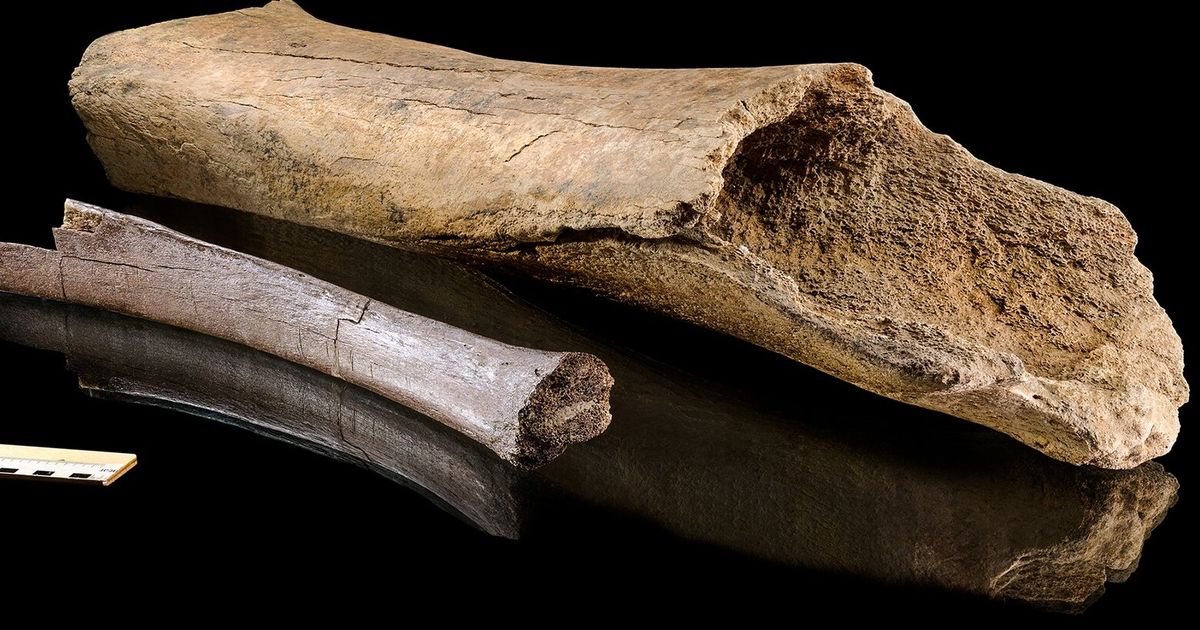
When a 125,000-year-old elephant skeleton, pierced by a wooden spear, was discovered in an ancient lake bed in Germany in 1948, it was assumed that the Neanderthals who inhabited Europe at that time were not sophisticated enough to hunt such massive megafauna. Skeptics argued that the spear found with the bones in the Lehringen lake bed had probably been placed there by geological chance rather than human hands. And for the next 78 years, the remains were treated more as a curiosity than a breakthrough. But a reassessment of the evidence, published last month in the journal Nature, tells a different story: The skeleton bears distinct tool marks, the unmistakable signs of a calculated kill. The new paper proposes that the original researchers who studied the so-called Lehringen elephant operated on the flawed assumption that any sign of butchery had been erased from the specimen.…