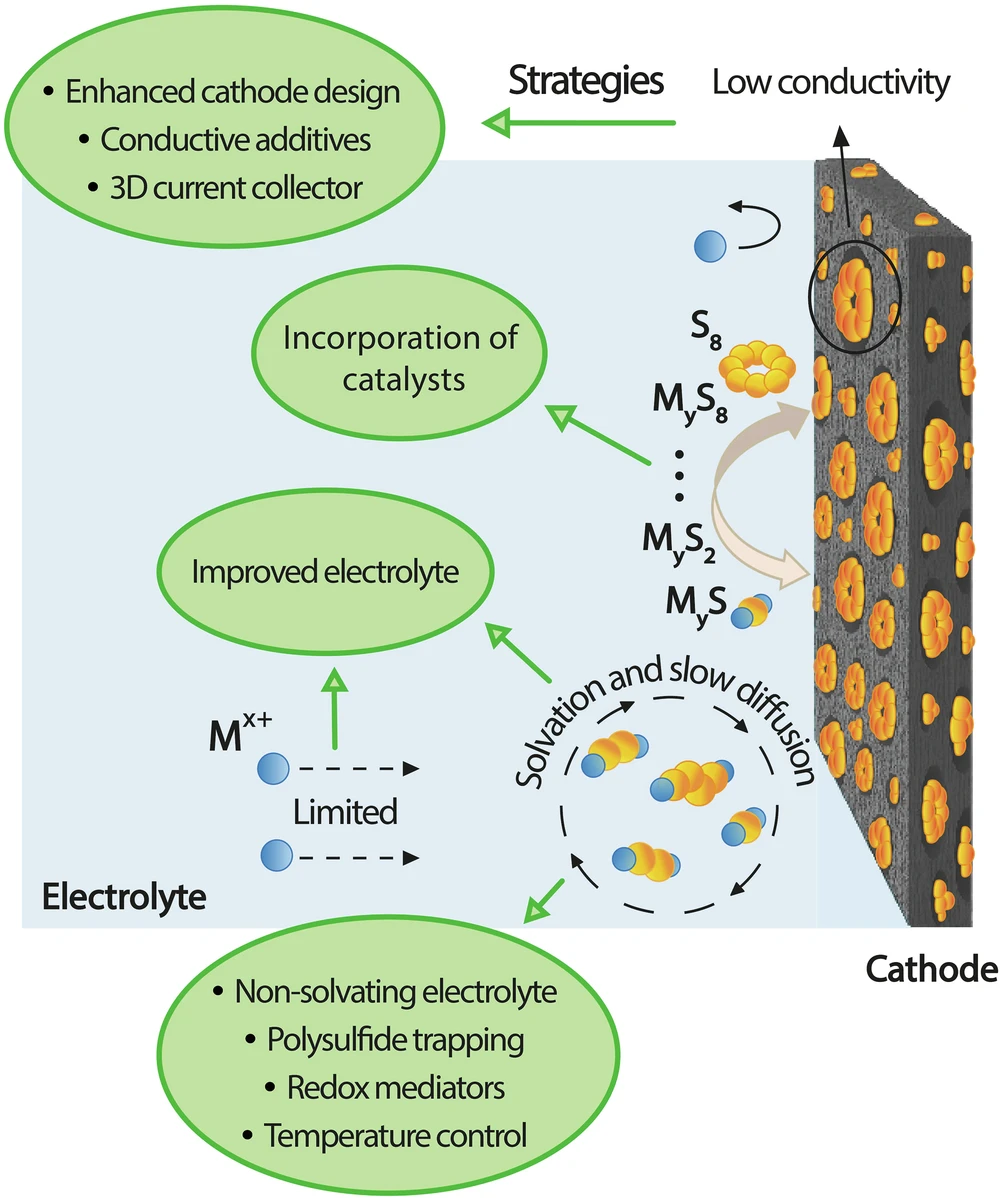
Sulfur cathodes remain a prominent area of battery research because they combine low-cost, abundant materials with very high theoretical energy density. A study published in Nature by researchers from CY University , the Catalonia Institute for Energy Research (IREC), the Catalan Institute of Nanoscience and Nanotechnology (ICN2), ICREA , and Fuzhou University examines sulfur-based battery systems through the lens of end-user requirements rather than idealized laboratory performance. Unlike reviews centered mainly on materials advances under controlled conditions, this paper focuses on practical constraints tied to manufacturing and operation, arguing that sulfur-based batteries could support electric mobility, renewable energy integration, and grid stabilization only if performance can be sustained under realistic cell designs. Lithium-ion batteries still dominate the energy storage market, with average cell costs around €110/kWh, according to the review.…