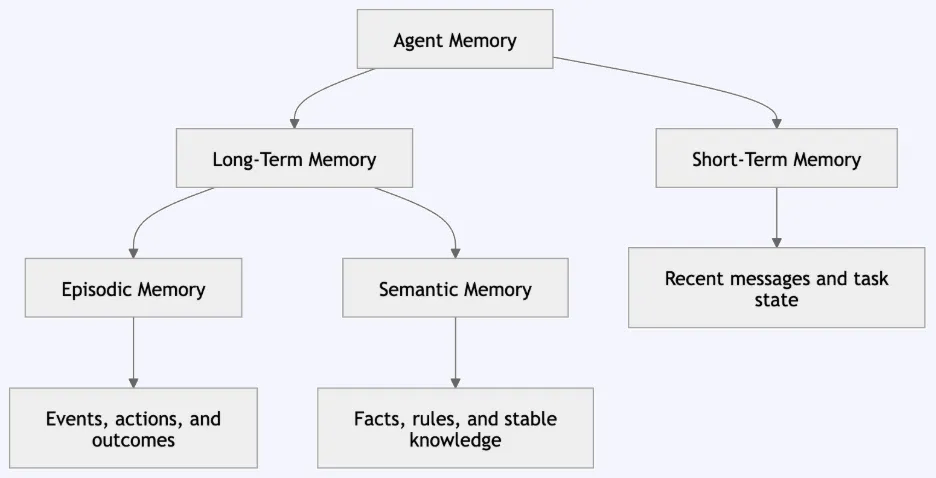
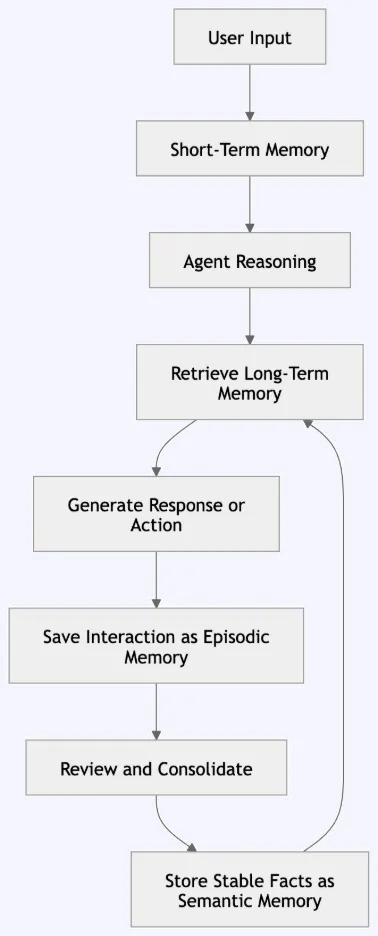
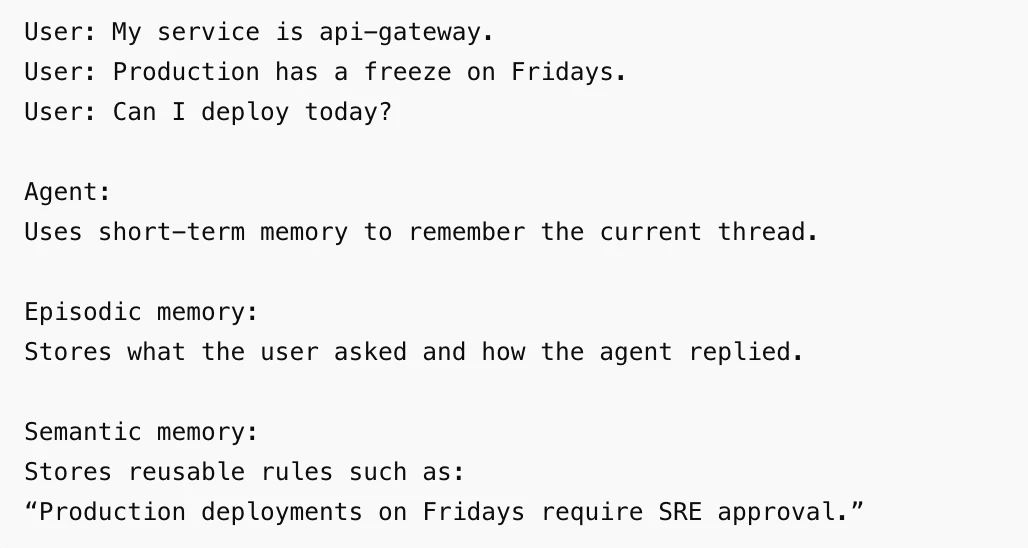
Memory shapes how humans think and how AI agents act. Without it, an agent only responds to the current input; with it, it can keep context, recall past actions, and reuse useful knowledge. AI memory spans short-term, episodic, semantic, and long-term memory, each with different design trade-offs around storage, retention, retrieval, and control. In this article, we’ll explore agent memory patterns, a practical bridge between cognitive science and AI engineering. Table of contents What Agent Memory Means Memory Types: From Cognitive Science to AI Agents Agent Memory Architecture and Data Flow Hands-on: Building Agent Memory with LangGraph in Google Colab Demo 1: Short-Term Memory Demo 2: Episodic Memory Demo 3: Semantic Memory Inspect Semantic Memory Choosing the Right Storage Backend Security, Privacy, and Governance Conclusion Frequently Asked Questions What Agent Memory Means Agent memory is the ability of an AI agent to store information, recall it later, and use it to improve future responses or…