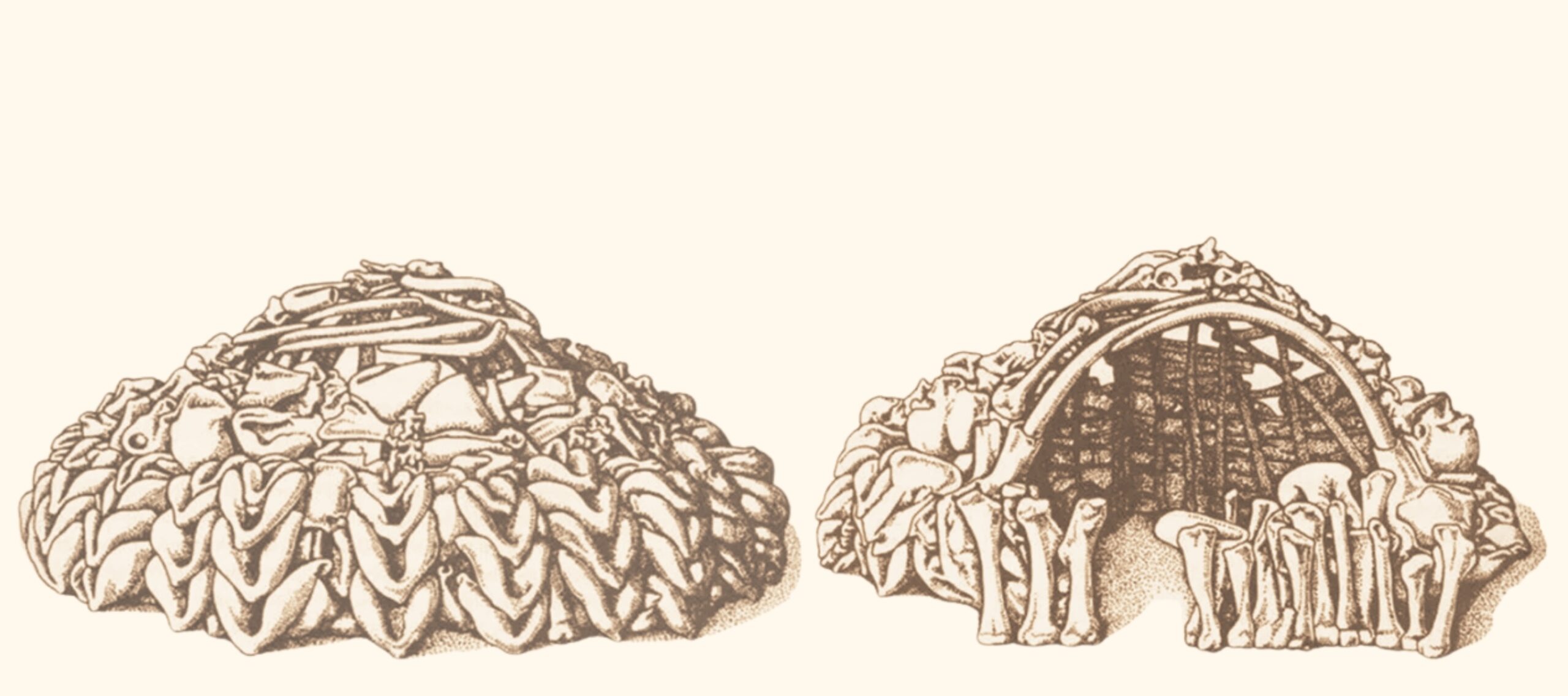
In 1753, the Jesuit priest Marc-Antoine Laugier described the origin of dwelling by imagining a lone “savage” troubled by nature’s extremes. This “primitive man,” seeking refuge from scorching heat and torrential rain, initially fled to a cave but found it too dark and filled with “foul air.” Upon leaving the cave, he embarks on a mission. “Resolved to make good by his ingenuity the careless neglect of nature,” Laugier writes, “he wants to make himself a dwelling.” Article continues after advertisement As Laugier’s story continues, the man wanders through a forest, stumbles upon fallen branches, and has an epiphany. “He chooses four of the strongest, raises them upright and arranges them in a square.” With surprising engineering intuition, he lays four more branches across their tops to create a frame. He then crowns it with a pitched triangle, making a roof truss, and covers it “with leaves so closely packed that neither sun nor rain can penetrate.…