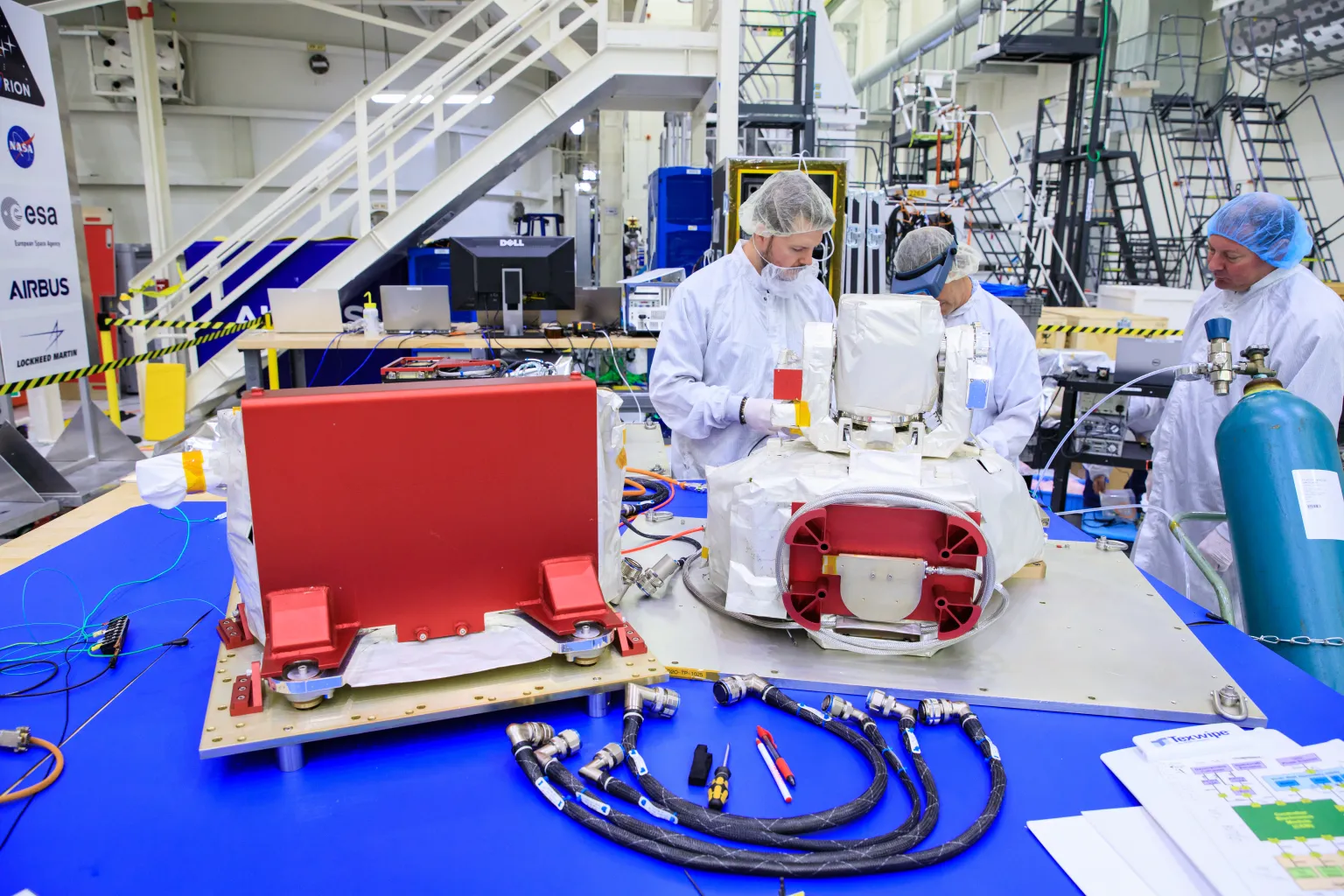
For most of human spaceflight history, the go to for communications has been radio waves, a technology that has served us remarkably well, but one that is beginning to show its age. When NASA's Artemis II mission carried four astronauts around the Moon in April the year, engineers quietly tested a laser communications terminal that could one day rewrite the rules of deep space exploration. Bolted to the exterior of the Orion spacecraft, the Orion Artemis II Optical Communications System that was developed by MIT Lincoln Laboratory, became the first laser communications terminal ever to support a crewed mission at lunar distance. Rather than radio waves, the device used invisible infrared light to carry data between the spacecraft and receivers on Earth, exploiting the fact that the shorter the wavelength, the more information you can squeeze into a single beam.…