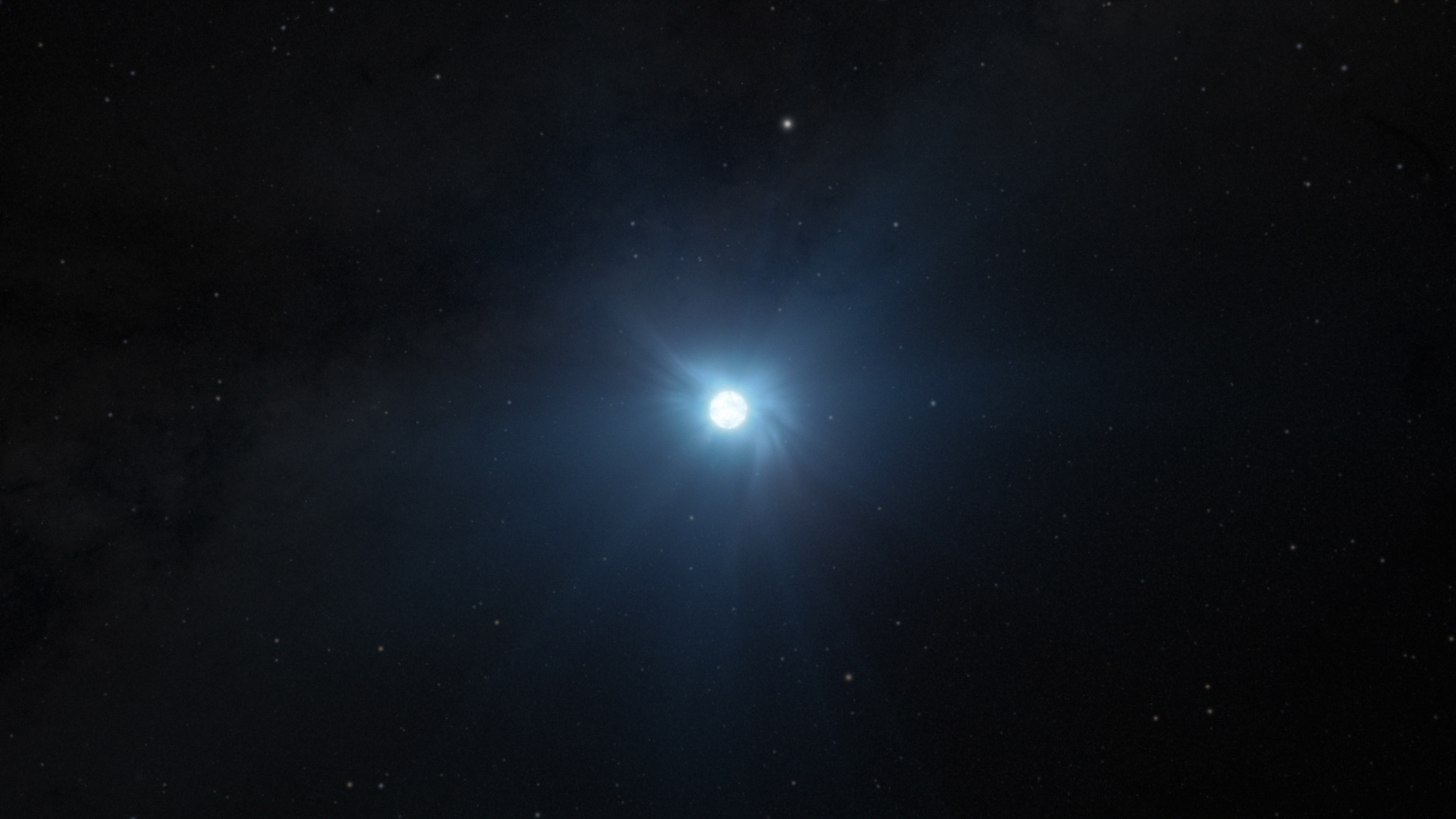
Astronomers have long known that neutron stars, the crushed cores left behind after massive stars explode, should be scattered throughout the Milky Way galaxy. However, most of them are effectively invisible. A new study published in Astronomy and Astrophysics suggests NASA’s upcoming Nancy Grace Roman Space Telescope could spot them anyway. Using detailed simulations of the Milky Way and Roman’s future observations, researchers showed the flagship observatory may be able to identify and characterize dozens of isolated neutron stars through a subtle effect called gravitational microlensing. “Most neutron stars are relatively dim and on their own,” said Zofia Kaczmarek of Heidelberg University in Germany, who led the study . “They are incredibly hard to spot without some sort of help.” Finding what’s invisible Neutron stars pack more mass than the Sun into a sphere about the size of a city. Studying them helps us understand how stars live, die, and spread heavy elements throughout the universe.…