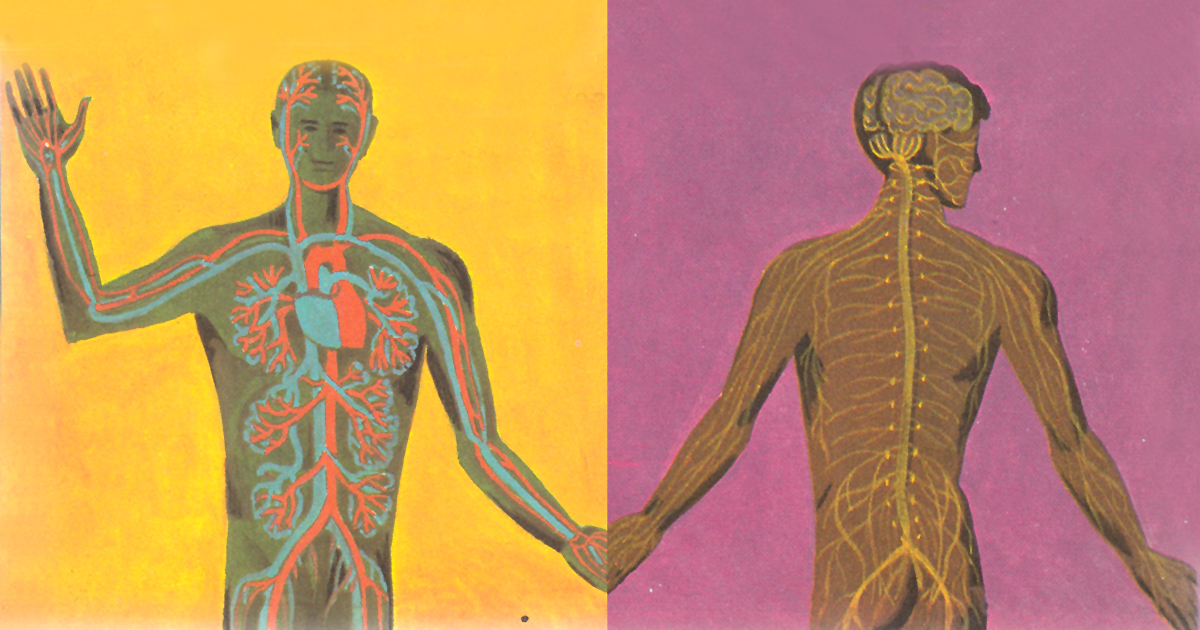
“A purely disembodied human emotion is a nonentity,” William James wrote in his pioneering 1884 theory of how our bodies affect our feelings — the first great gauntlet thrown at the Cartesian dualism of body versus mind. In the century and a half since, we have come to see how the body and the mind converge in the healing of trauma ; we have come to see consciousness itself as a full-body phenomenon . Beyond the brain, no portion of the body shapes our mental and emotional landscape more profoundly than the tenth cranial nerve — the longest nerve of the autonomic nervous system that unconsciously governs the inner workings of the body. Known as the vagus nerve — from the Latin for “wandering,” a root shared with vagabond and vague — it meanders from the brain to the gut, touching every organ along the way with its tendrils, controlling everything from our heart rate and digestion to our reflexes and moods. One of Santiago Ramón y Cajal’s little-known drawings of the brain .…