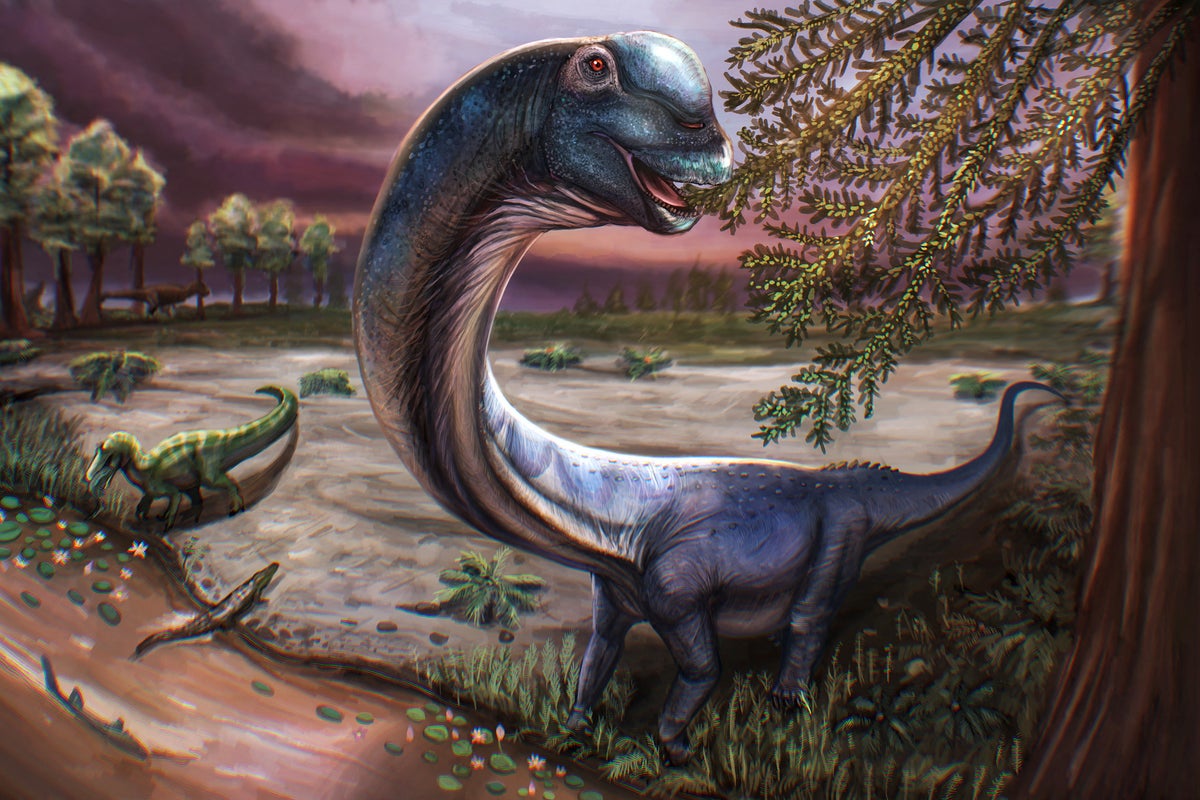
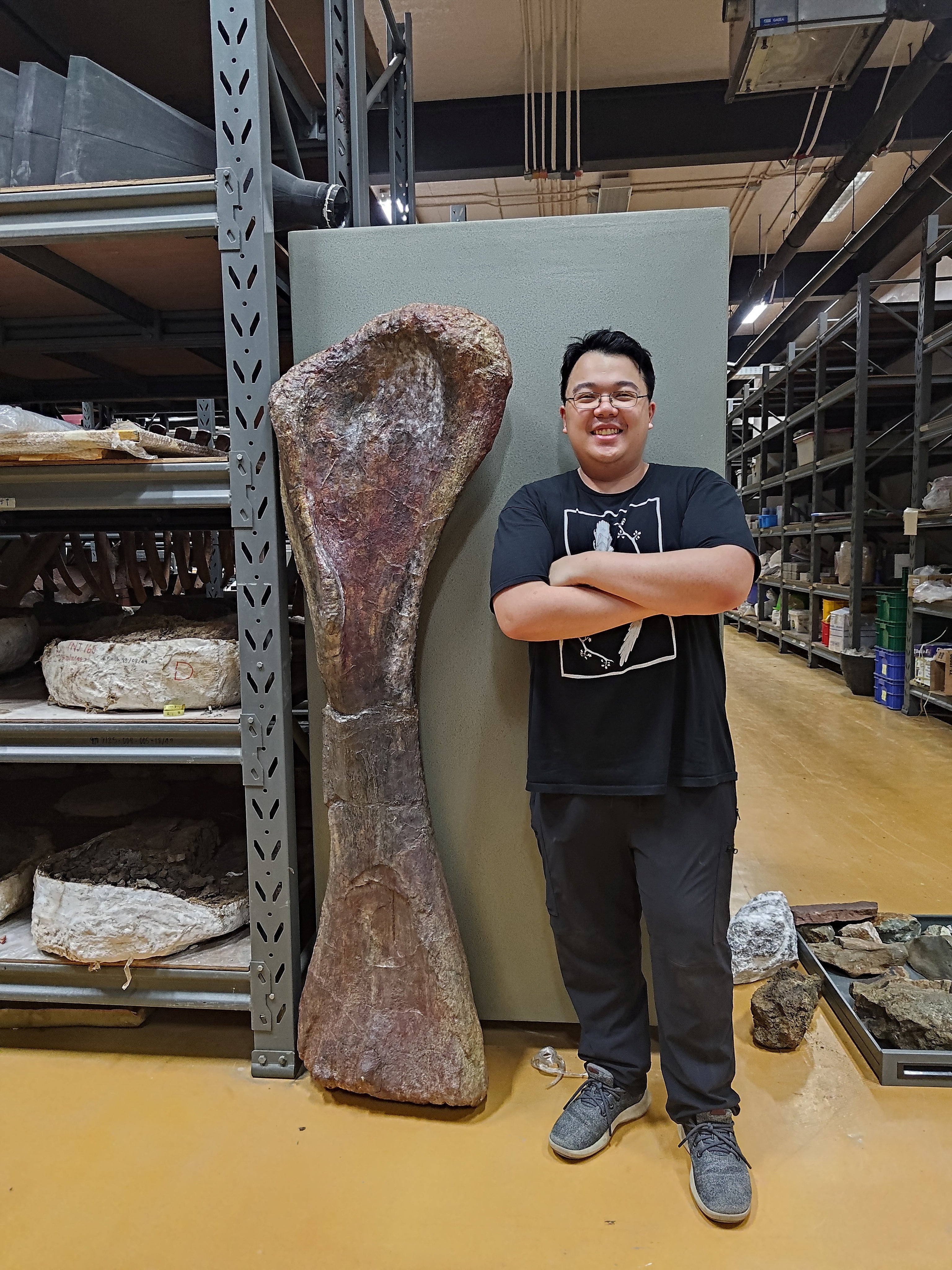
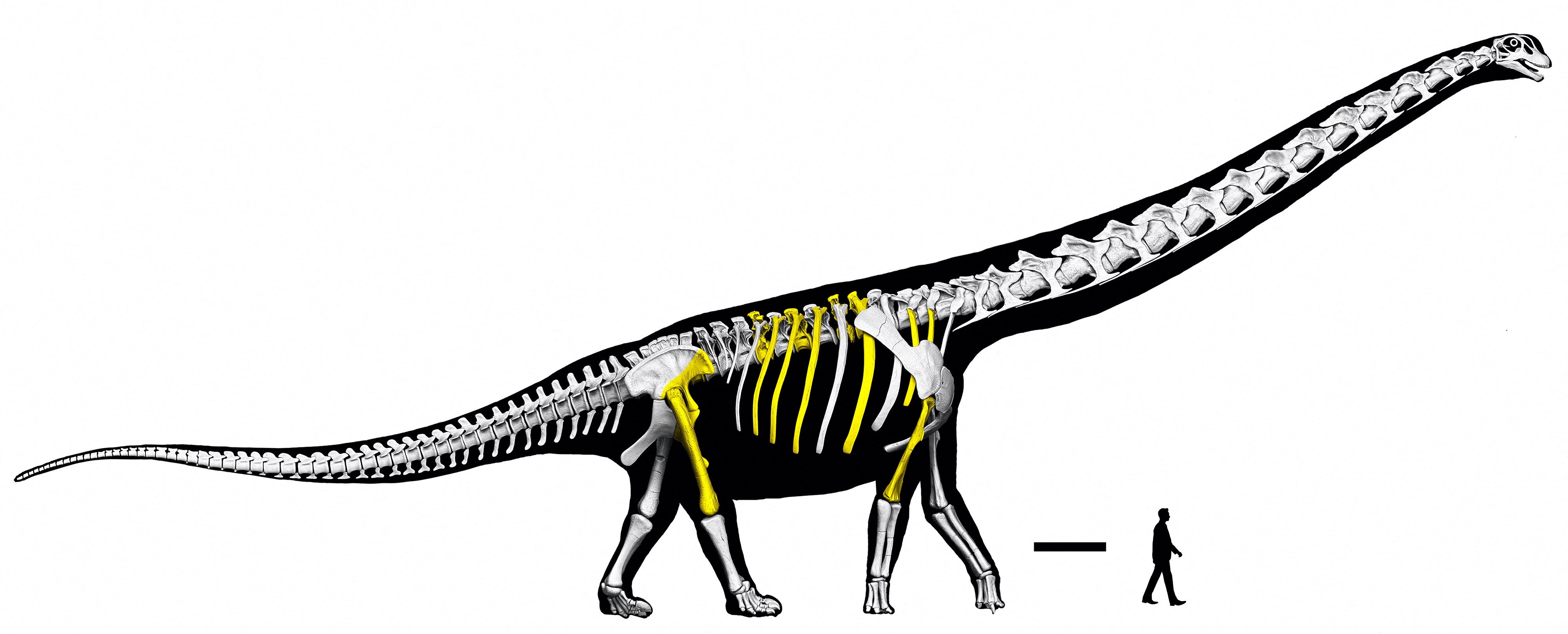
A colossal plant-eating dinosaur , measuring nearly 90 feet (27 meters) long, once roamed the warm, arid landscapes of what is now Thailand approximately 113 million years ago. This newly identified behemoth, named Nagatitan chaiyaphumensis, represents the largest-known dinosaur discovered in Southeast Asia. Researchers have unearthed significant skeletal remains of Nagatitan, a member of the sauropod lineage characterized by their distinctive long necks, lengthy tails, small heads, and four columnar legs. The fossils of this Cretaceous Period giant were initially spotted by a local villager in Thailand's northeastern Chaiyaphum province. Over several years, scientists meticulously excavated various bones, including spine, rib, pelvis, and leg bones, notably a humerus (front leg bone) measuring an impressive 5.8 feet (1.78 meters) long. Based on the dimensions of its humerus and femur, the corresponding hind leg bone, researchers estimate Nagatitan's body mass to have been between 25 and 28 tons.…