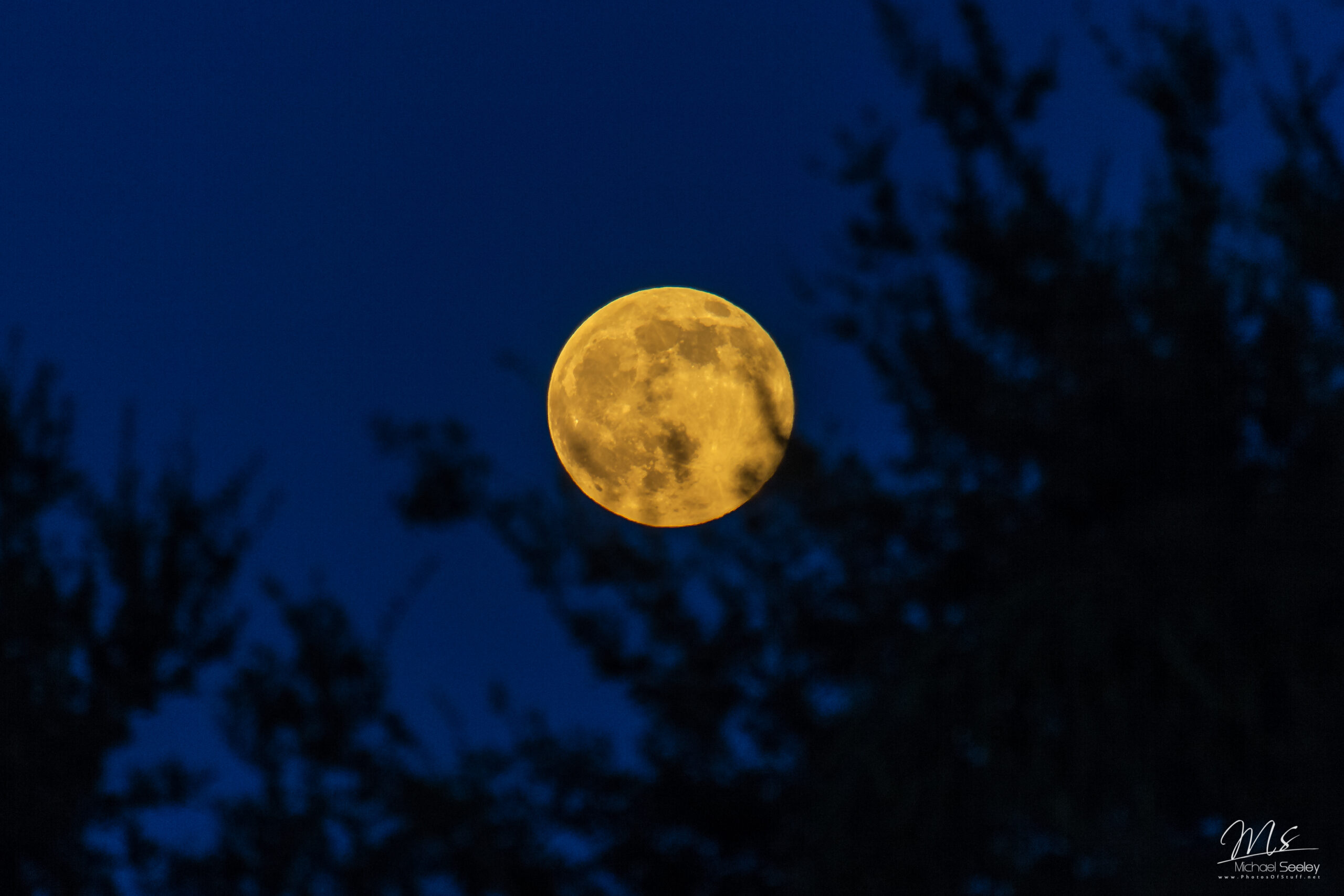
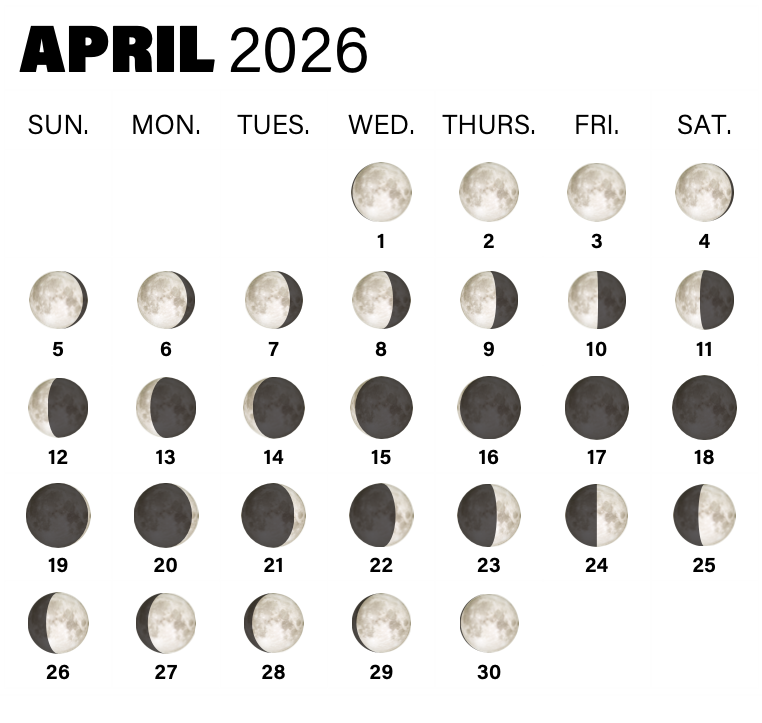
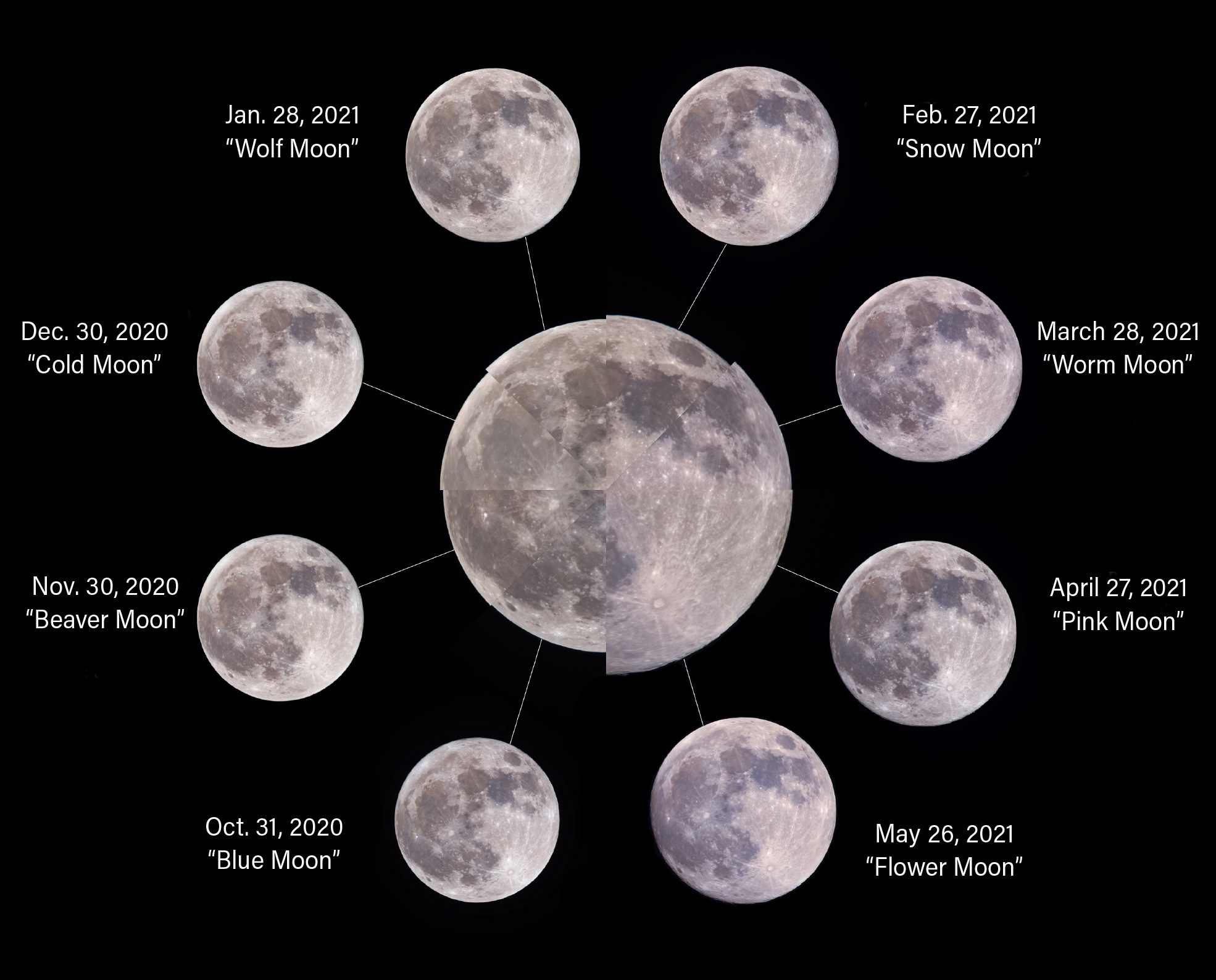
The phenomenon of a Full Moon arises when our planet, Earth, is precisely sandwiched between the Sun and the Moon. This alignment ensures the entire side of the Moon that faces us gleams under sunlight. Thanks to the Moon’s orbit around Earth, the angle of sunlight hitting the lunar surface and being reflected back to our planet changes. That creates different lunar phases. The next Full Moon will be the Flower Moon, which occurs at 1:23 p.m. EDT on Friday, May 1, 2026. We’ll update this article multiple times each week with the latest moonrise, moonset, Full Moon schedule, and some of what you can see in the sky each week. Here’s the complete list of Full Moons this year and their traditional names. 2026 Full Moon schedule and names of each (All times Eastern; * denotes a Super Moon.) Saturday, Jan. 3 — 5:03 a.m. — Wolf Moon* Sunday, Feb. 1 — 5:09 p.m. — Snow Moon Tuesday, March 3 — 6:38 a.m. — Worm Moon | Total lunar eclipse Wednesday, April 1 — 10:12 p.m. — Pink Moon Friday, May 1 — 1:23 p.m.…