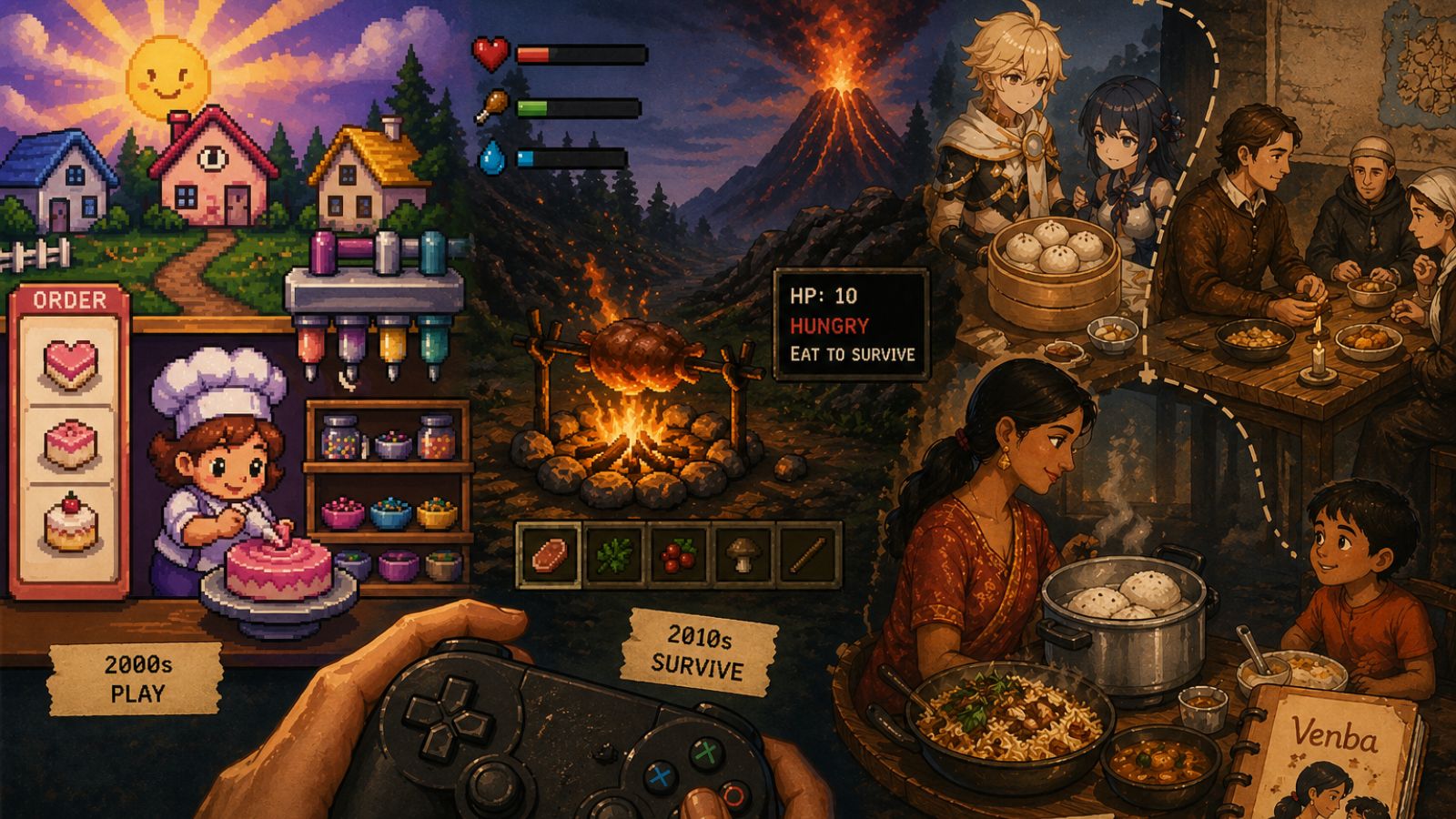
Three houses stand at the crossroads of one another. A curved brown route, sunflower yellow and faint red, a defining feature in the game. The houses are asymmetrical, yet the inanimate pixels evoke nostalgia and liveliness. The blue eyes and eyelashes become the defining detail, piquing the player’s curiosity. The white fences at the corner of the frame and the purple sky, with evenly stretched sunrays, illuminate the digital world. In Purble Palace, I remember moving to the house at the centre and baking cakes based on orders flashing on the left of the screen. The container shapes, icing colours, border decorations and toppings sat neatly on a shelf, while piping mechanisms hung above a rotating tray. The mini-cake game is colourful and vibrant, etched into memory like it is for most Gen Z kids who grew up in the 2000s. Pixels and play: When food stopped being cute By 2016, that childhood garden of fantasy had begun to feel distant. I stepped into games that felt less like play and more like survival.…