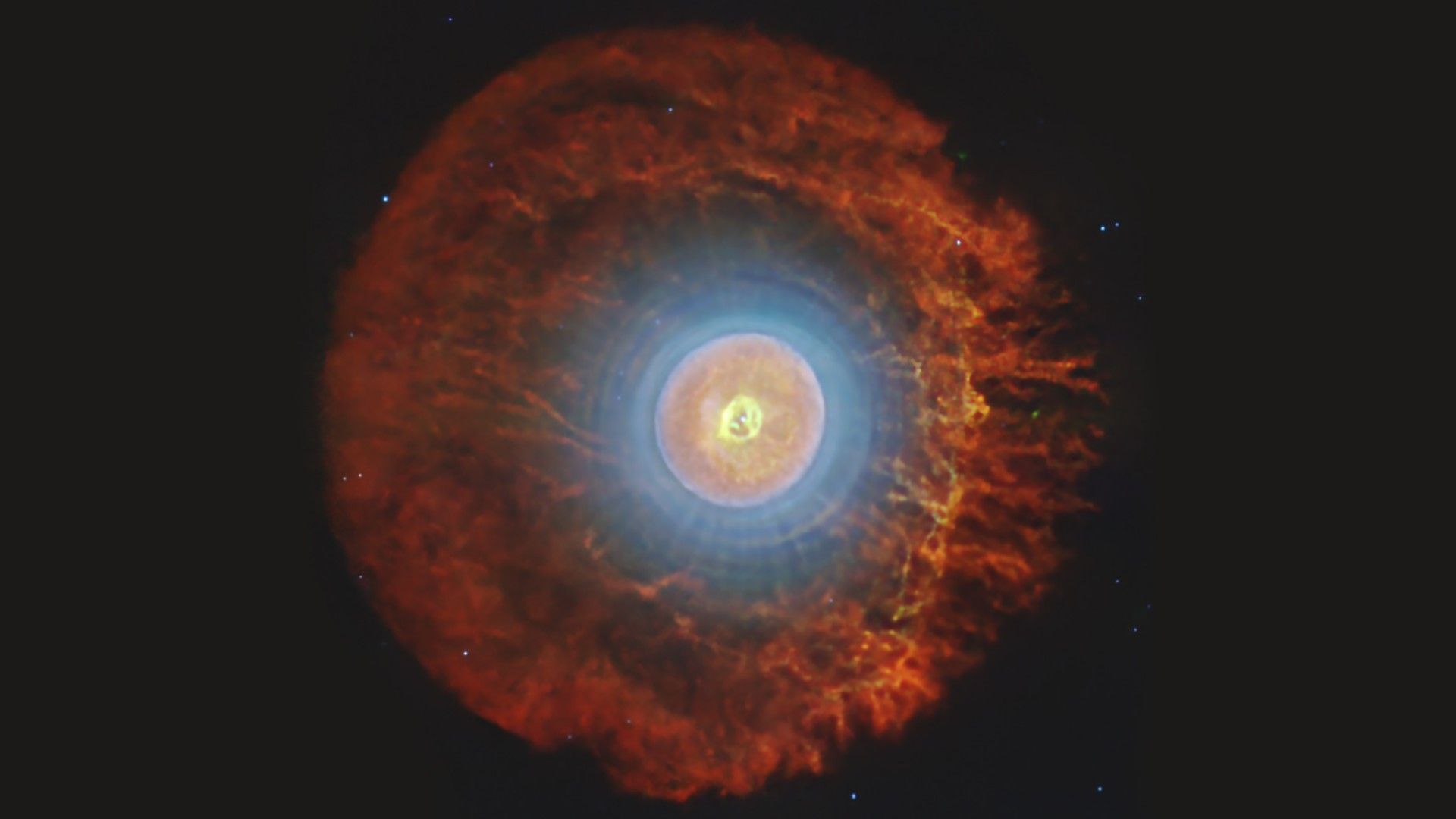
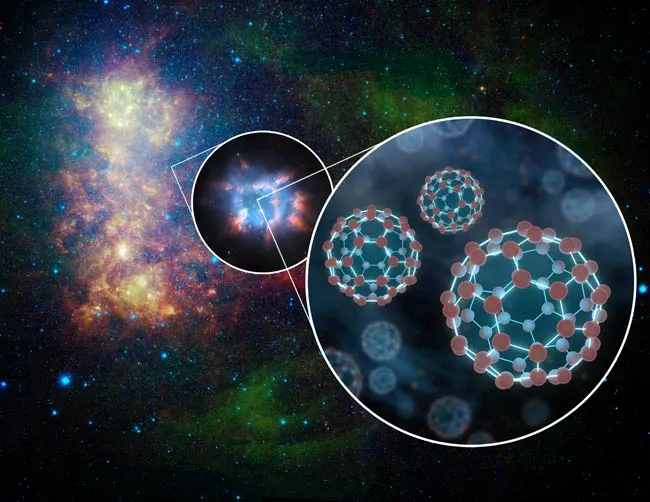
An image shows planetary nebula Tc 1 as observed by the James Webb Space Telescope's Mid-Infrared Instrument (MIRI), combining nine filters spanning wavelengths from 5.6 to 25.5 microns, well beyond what the human eye can detect. Blue tones represent hotter gas at shorter mid-infrared wavelengths; red tones trace cooler material at longer wavelengths. The image was processed by Katelyn Beecroft using PixInsight. (Image credit: NASA / ESA / CSA / Western University, J. Cami) The spectacular birthplace of weird carbon molecules known as "buckyballs" came to light in new imagery of a nebula from the James Webb Space Telescope. The gas cloud includes an upside-down question mark shape, which marks a structure scientists don't yet understand. The James Webb Space Telescope (JWST) peered 10,000 light-years into space to trace the origin of buckyballs, which are large and hollow molecules resembling a soccer ball.…