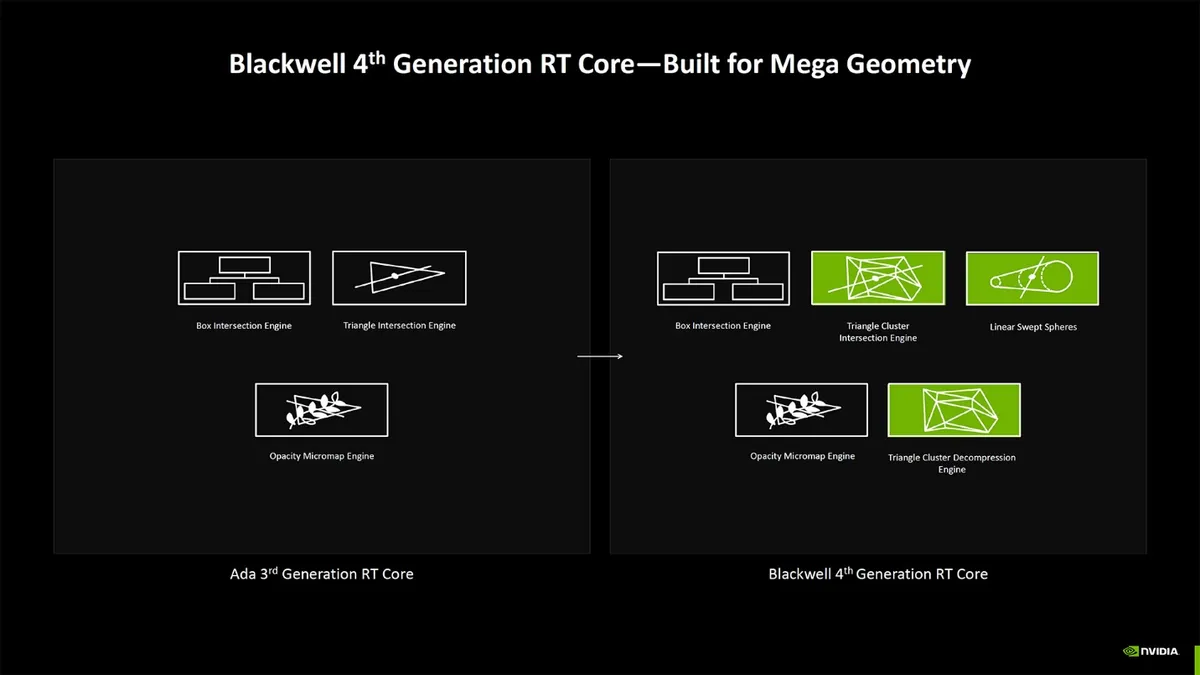
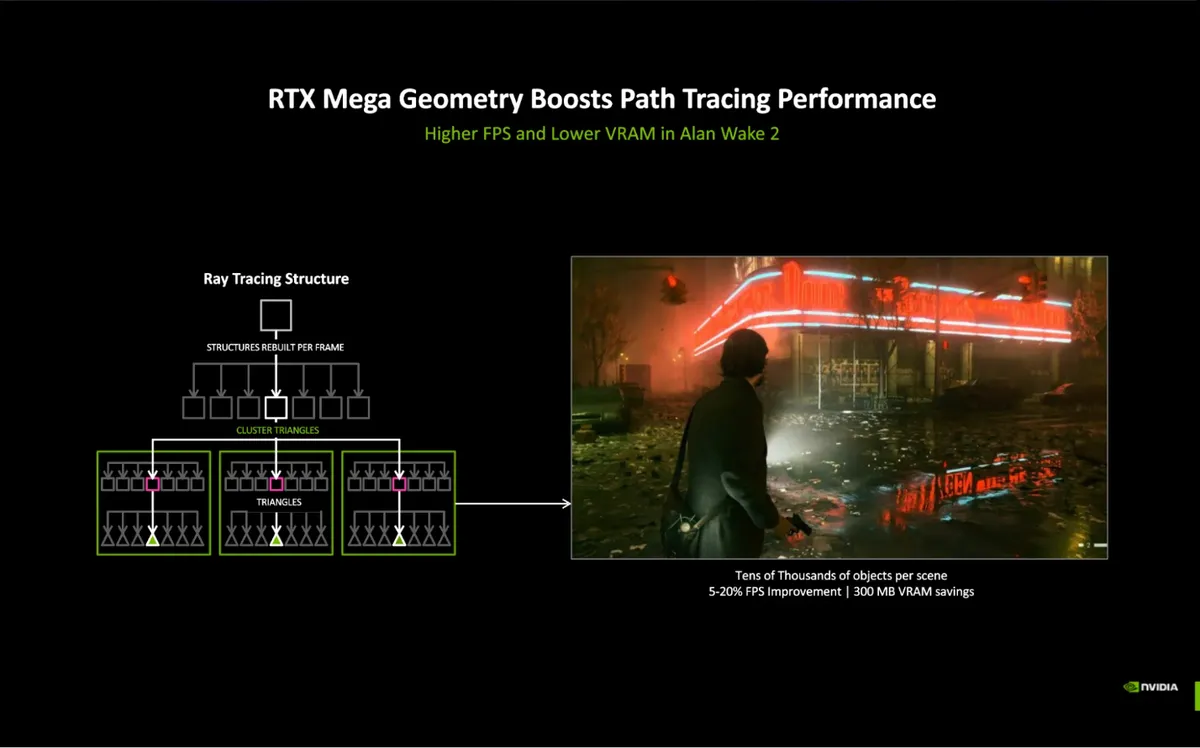
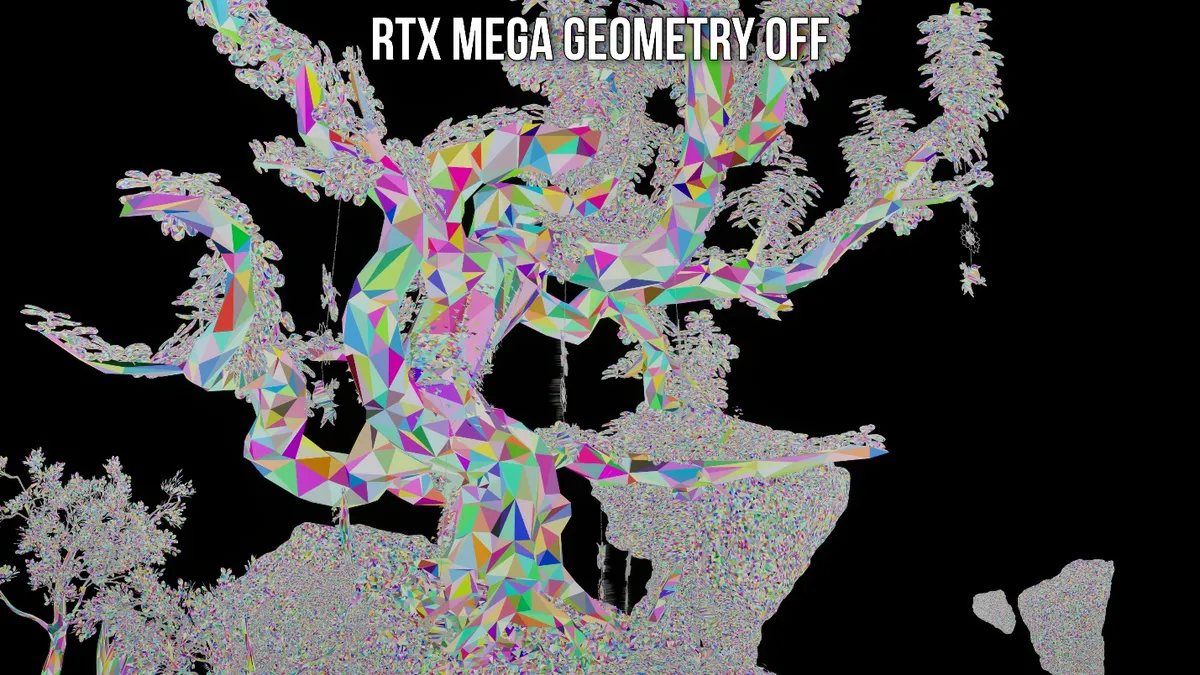
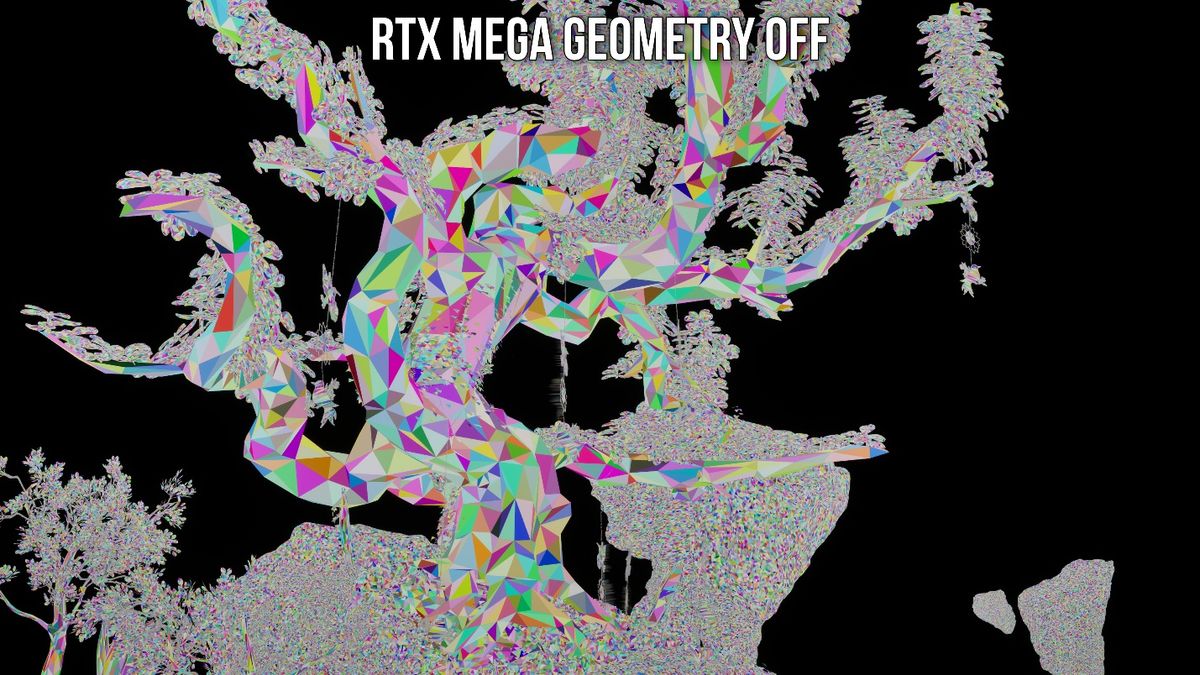
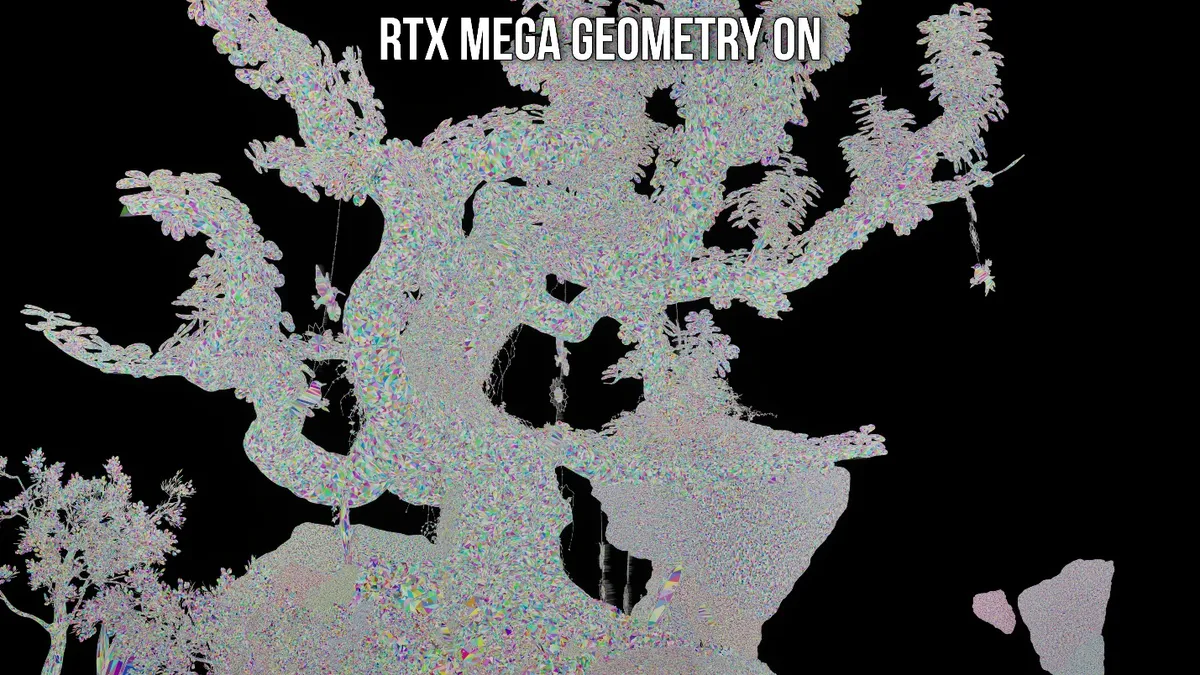
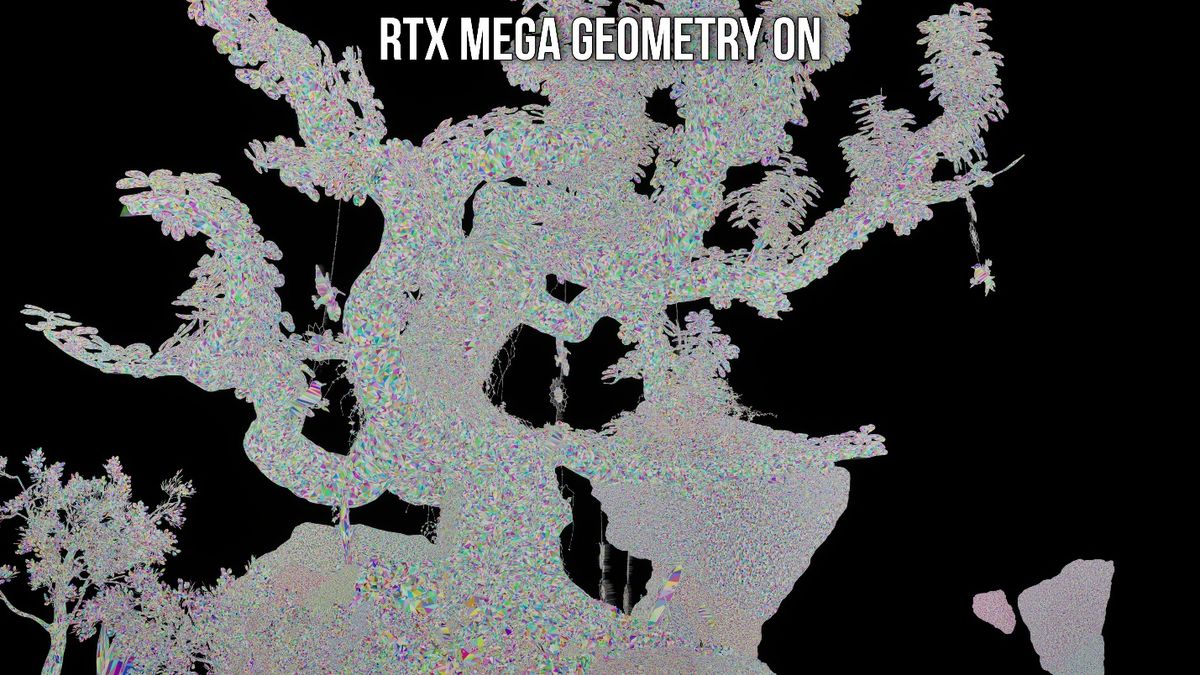
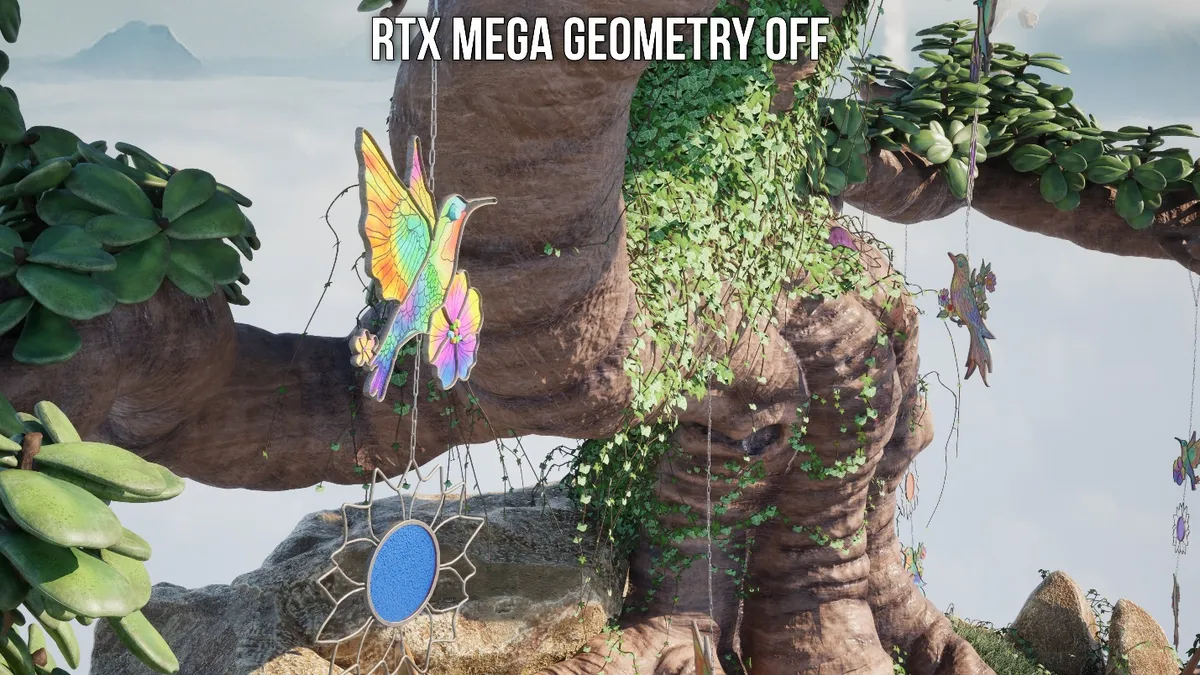
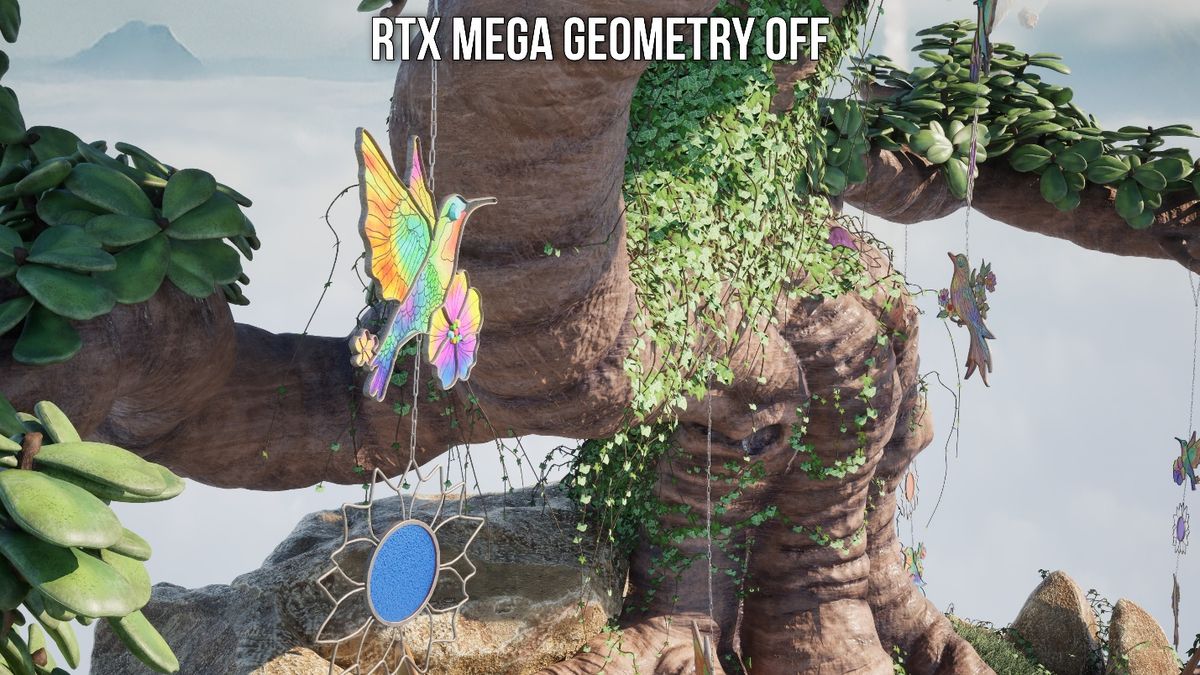
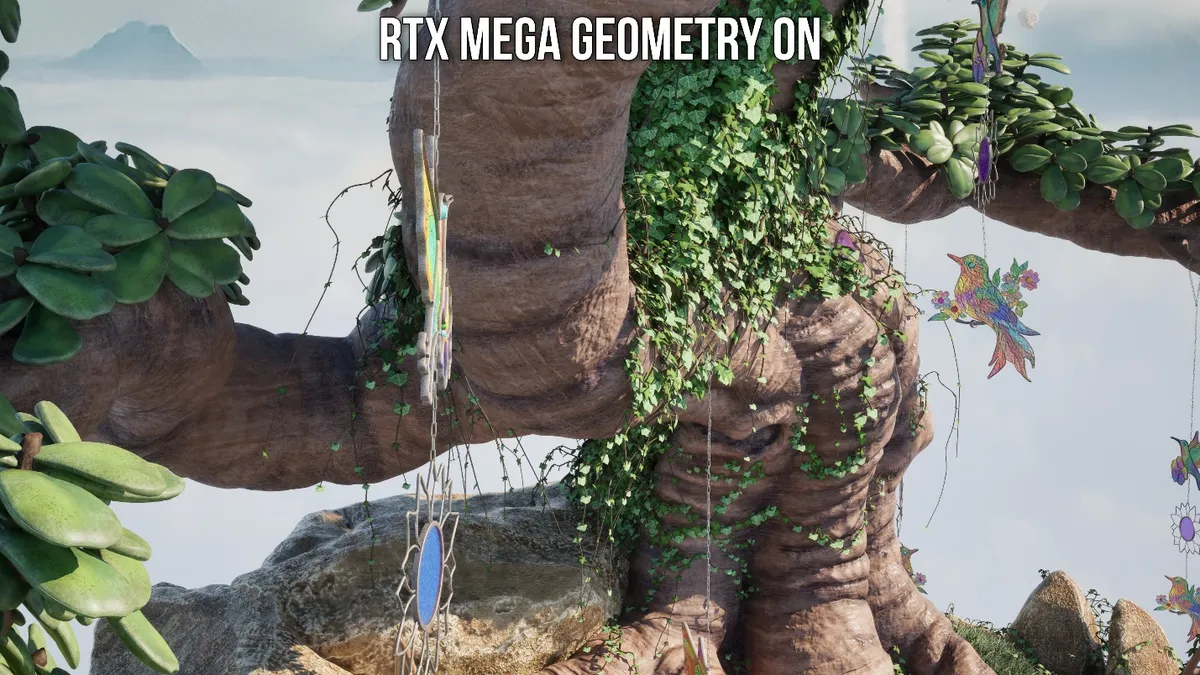
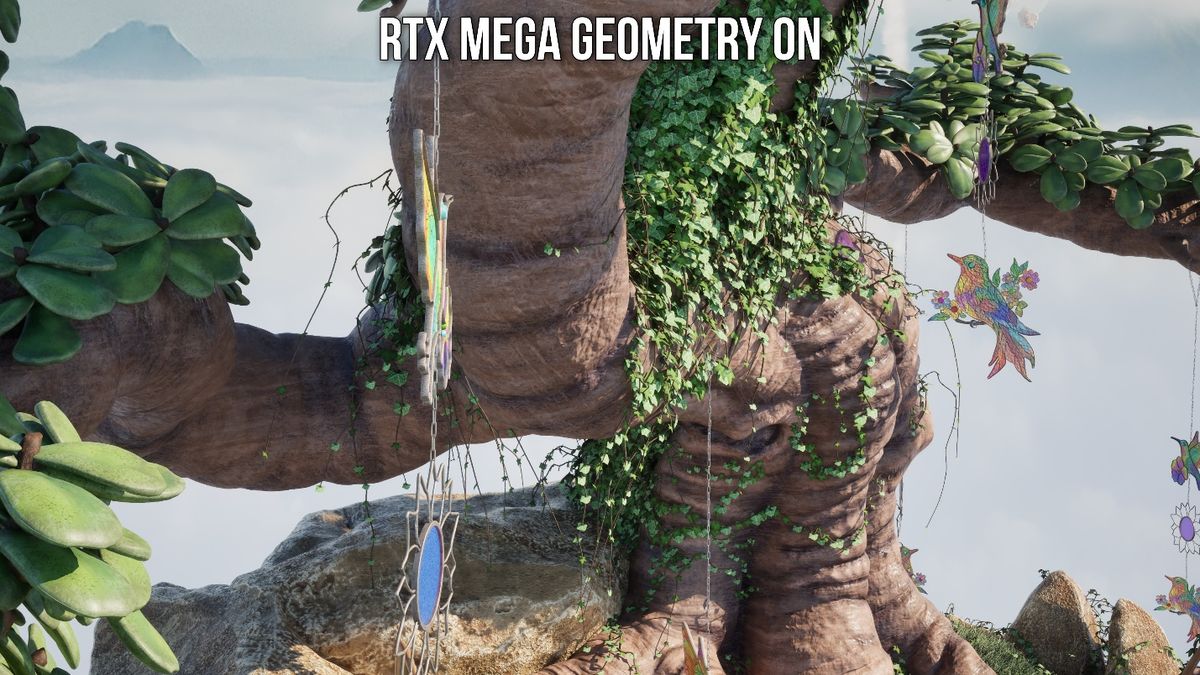
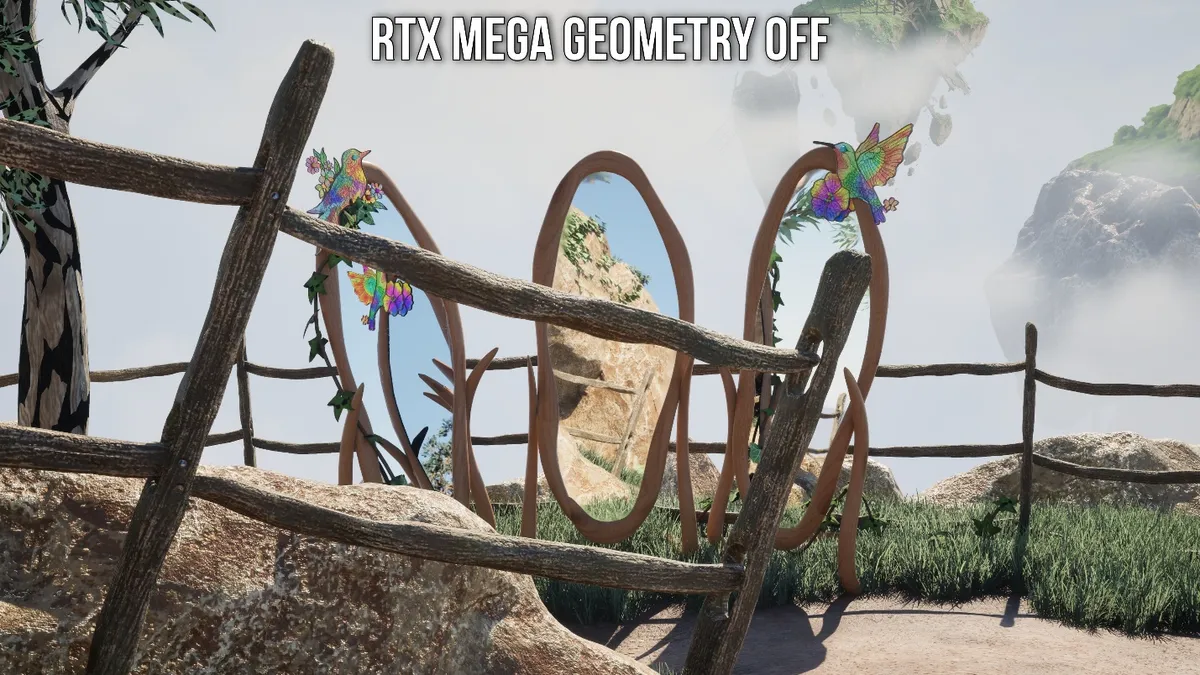
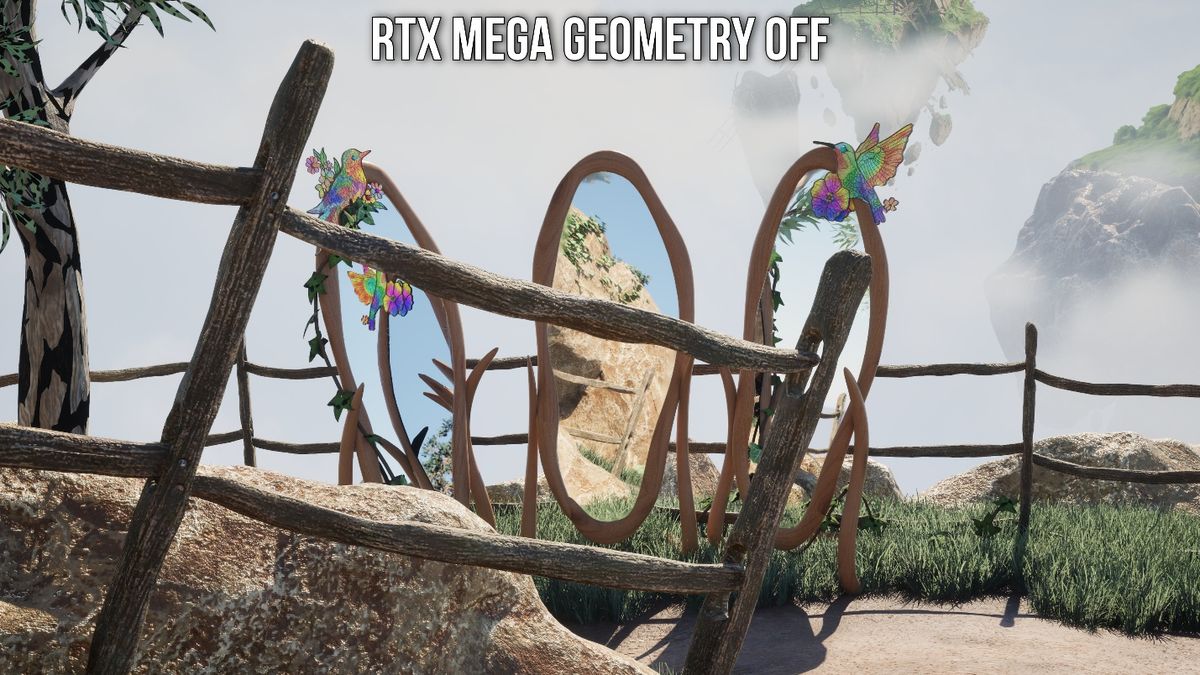
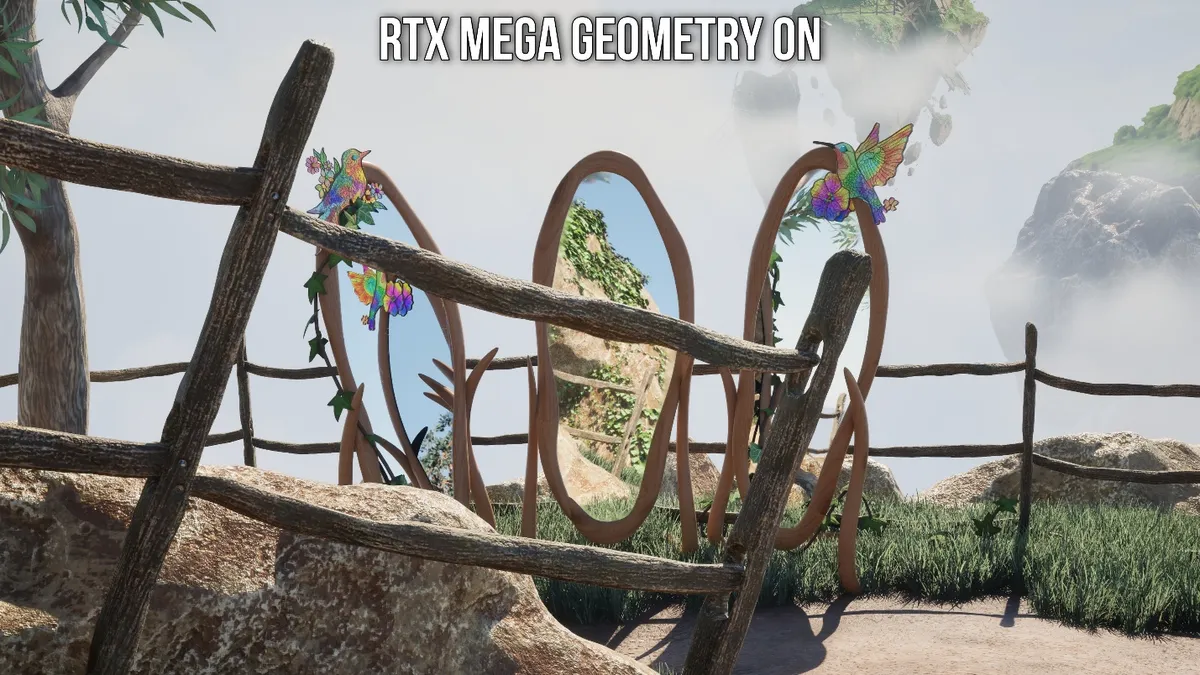
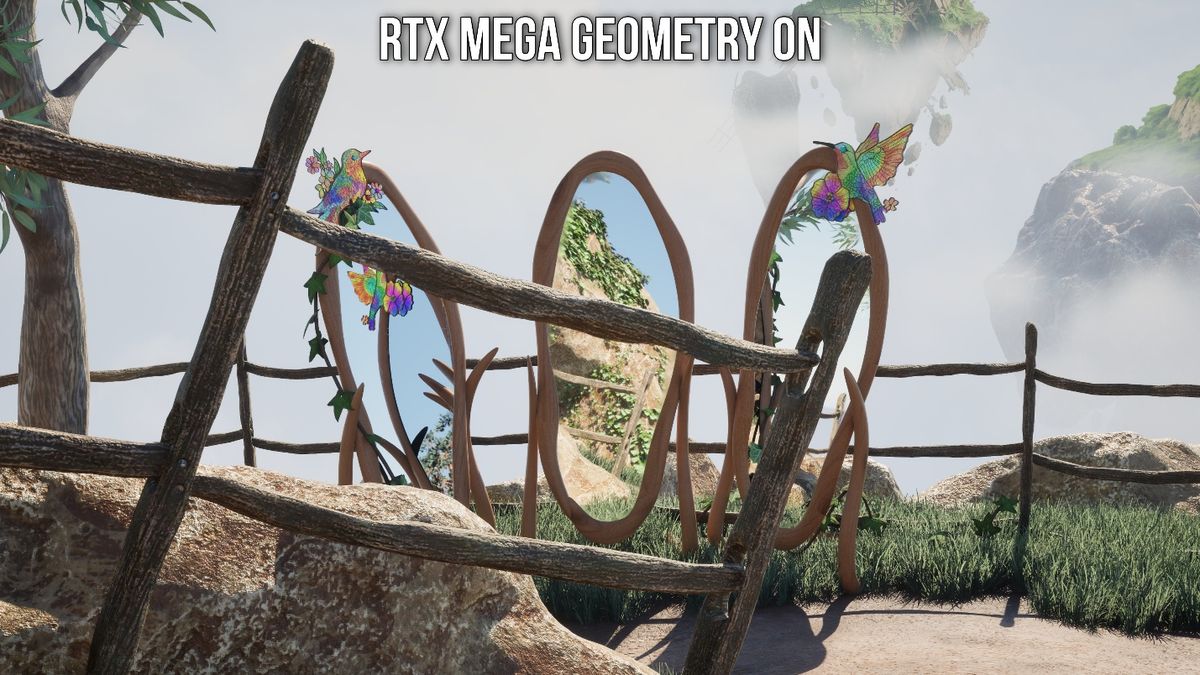
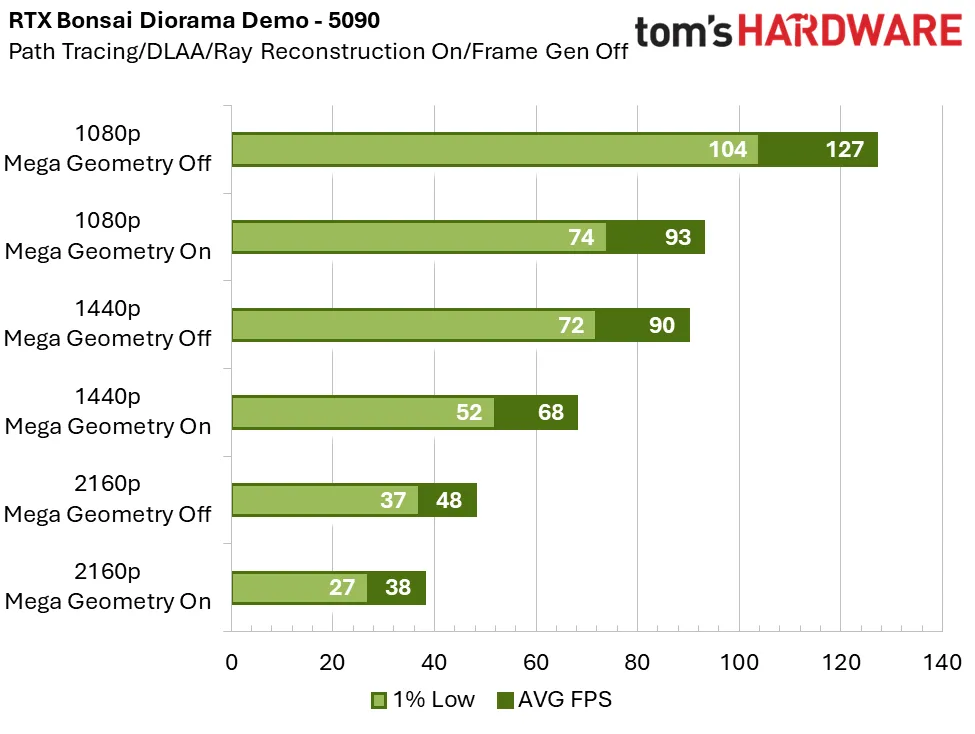
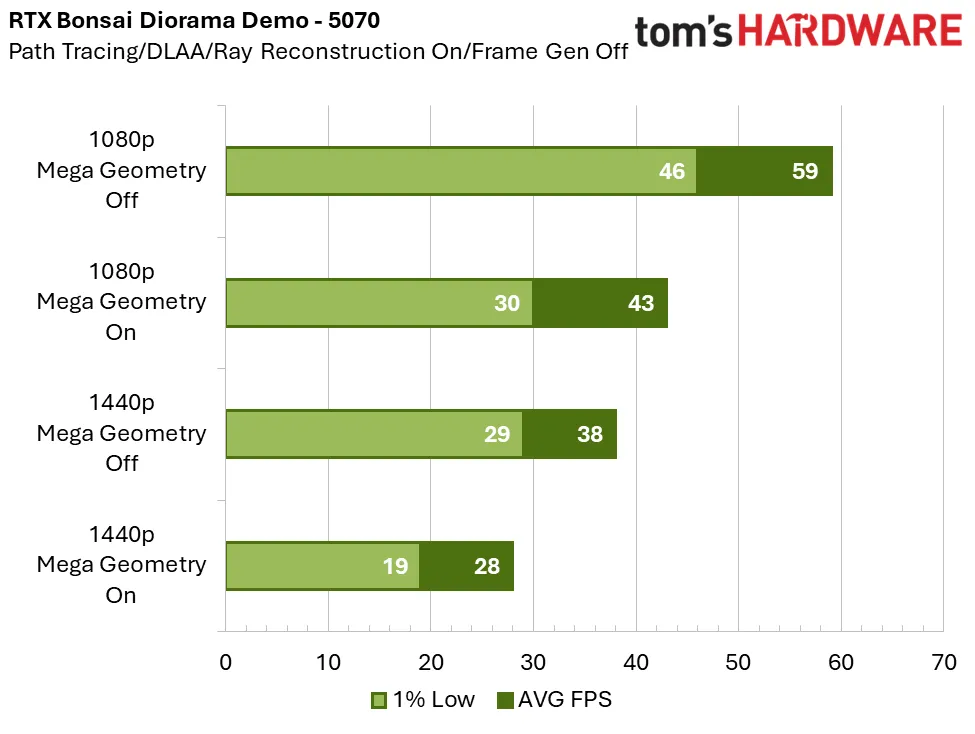
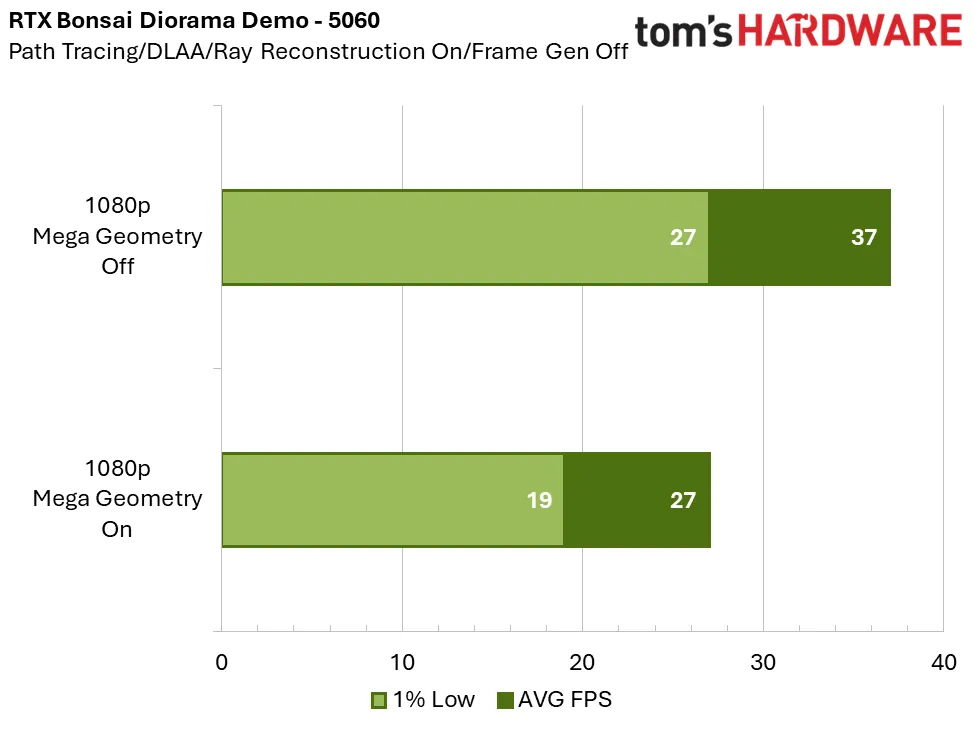
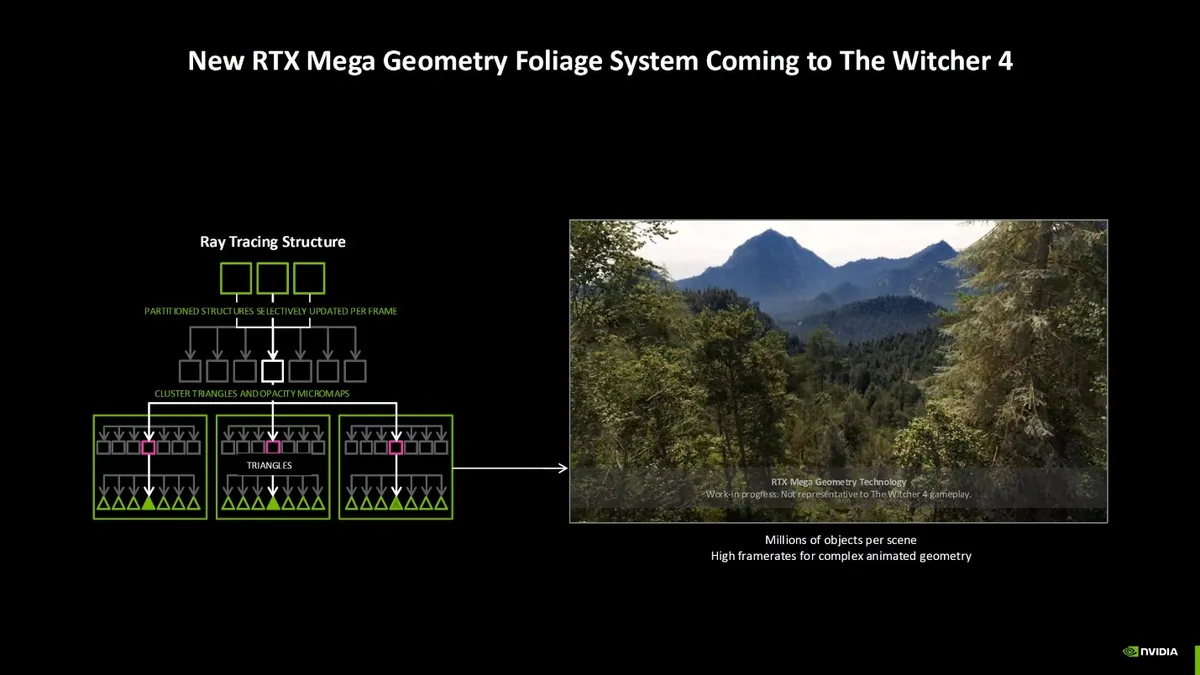
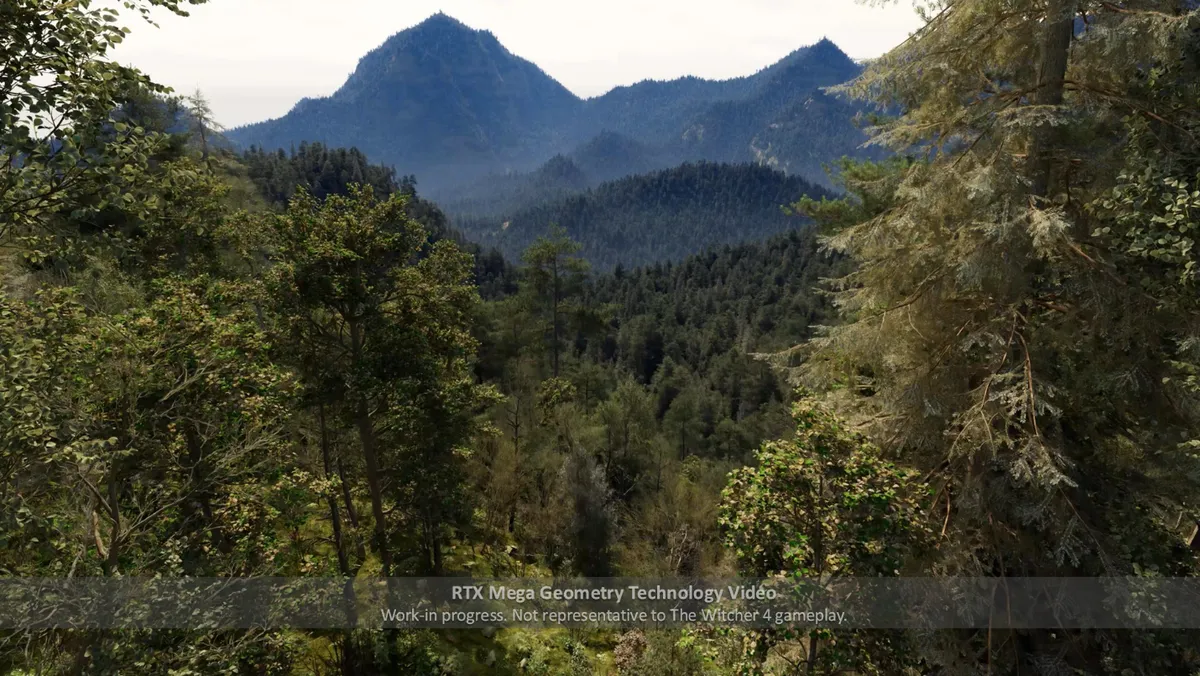
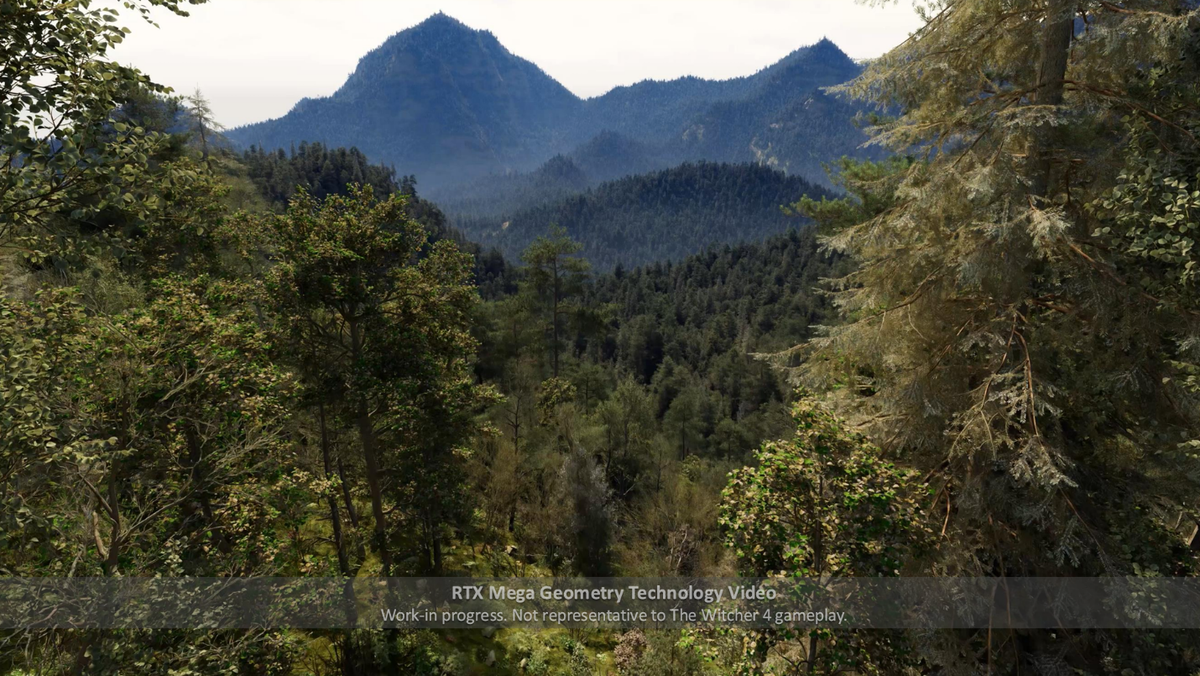
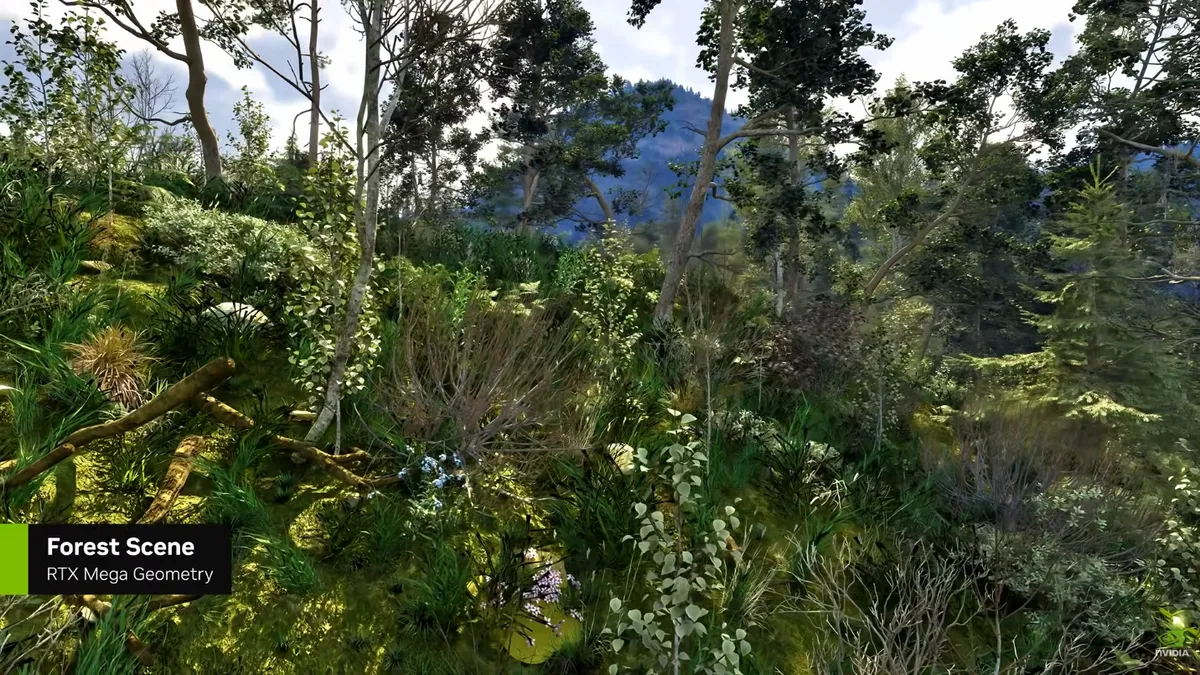
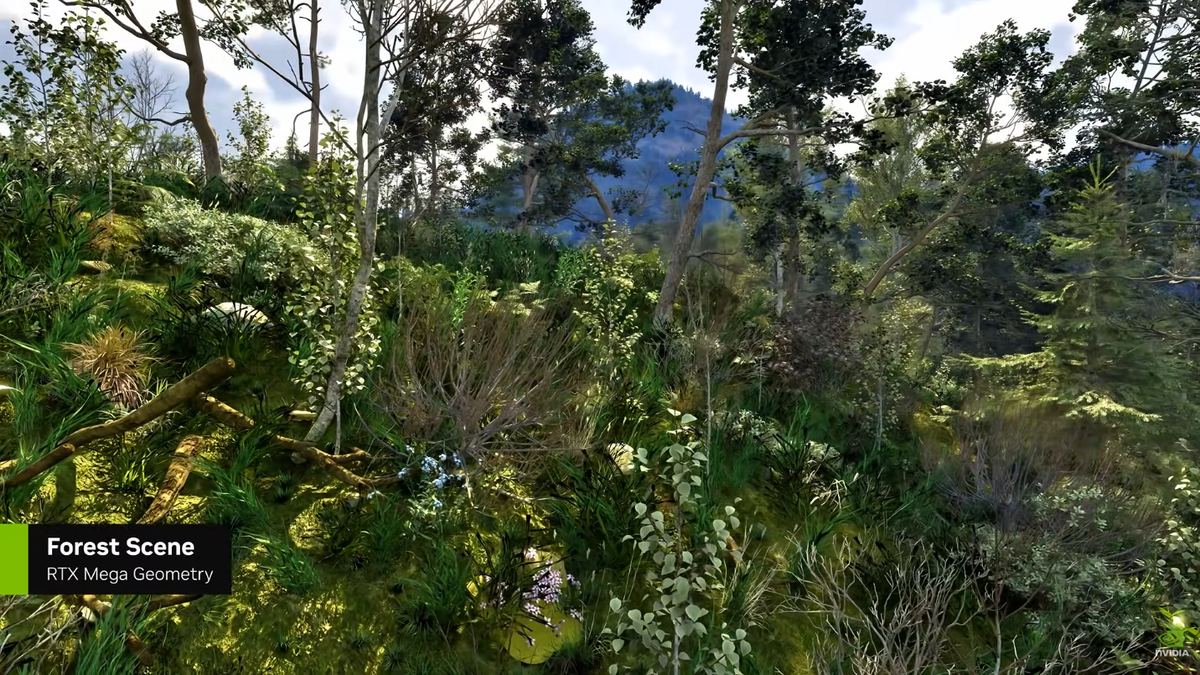
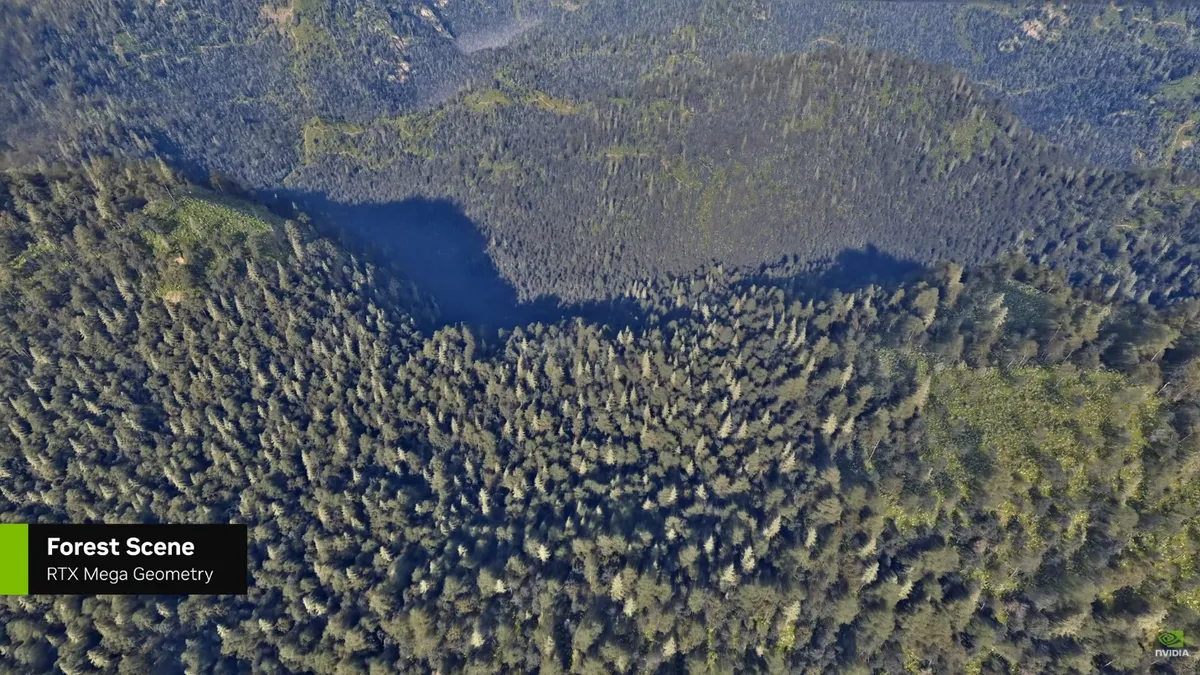
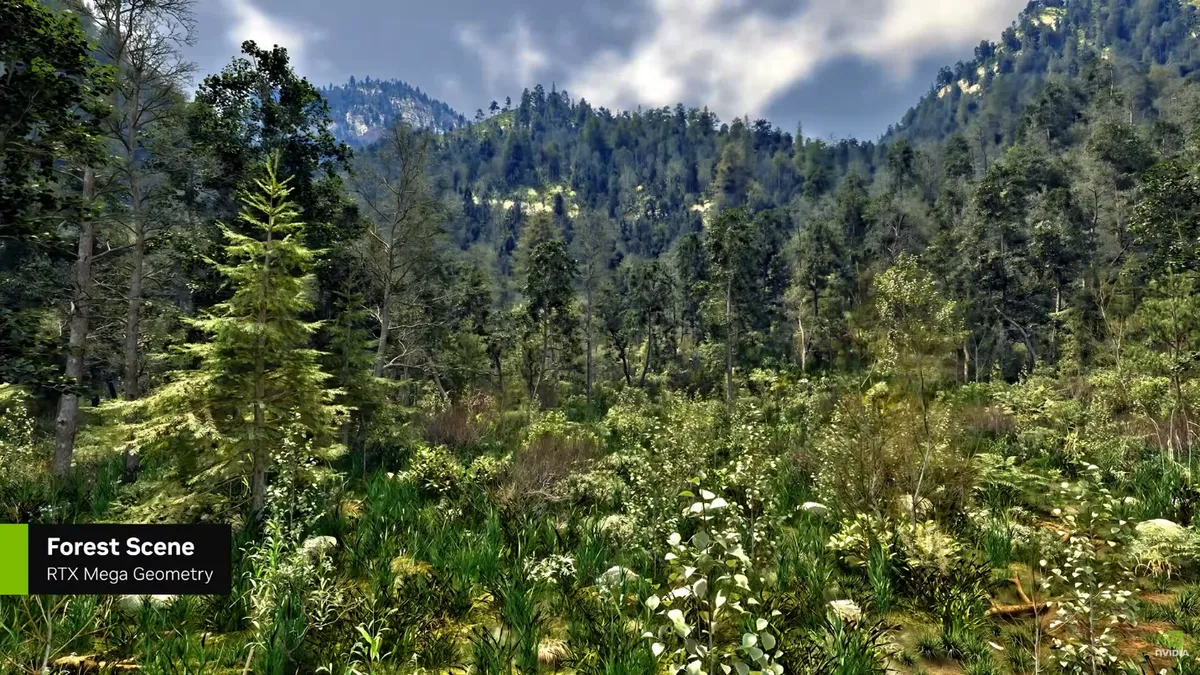
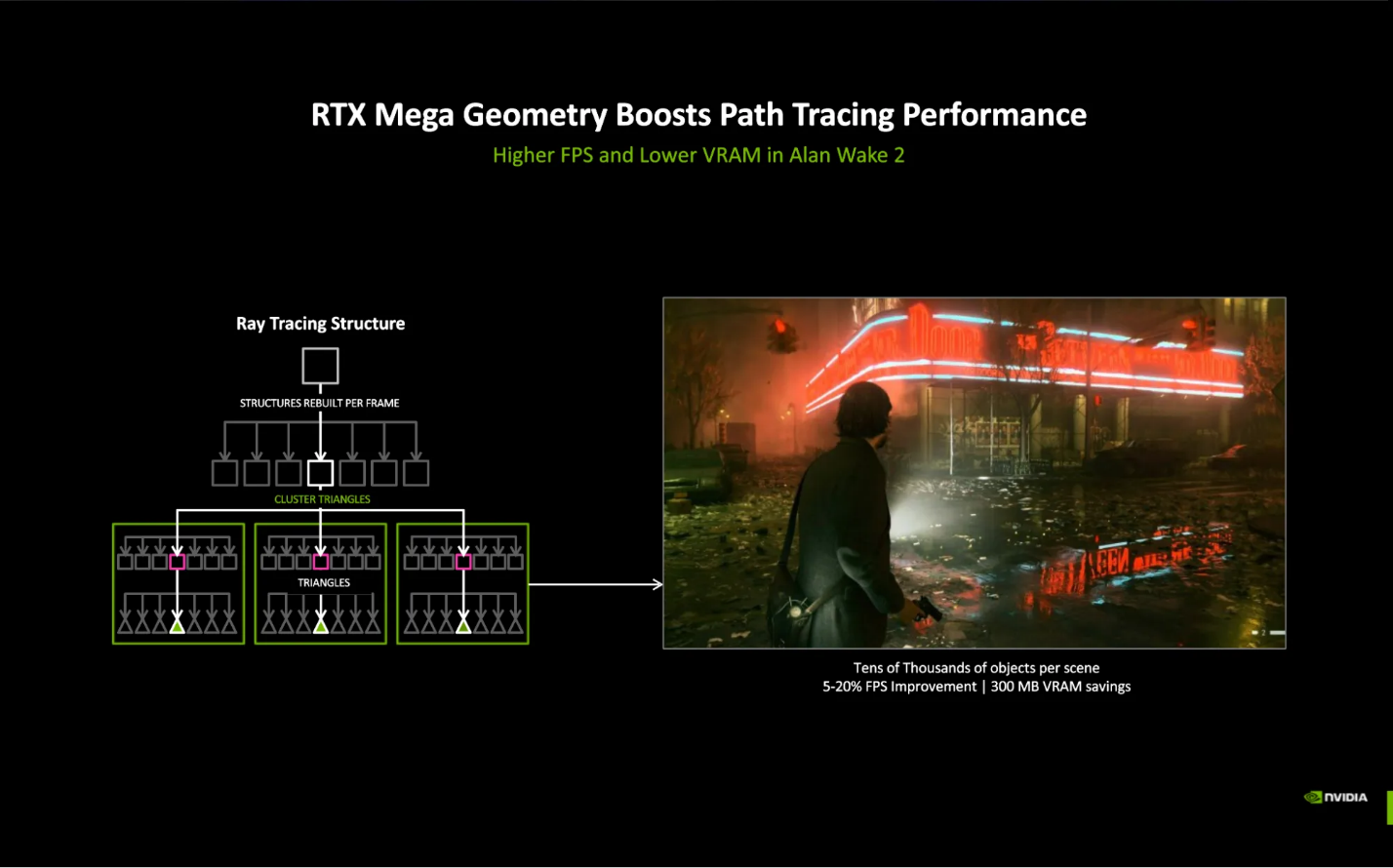
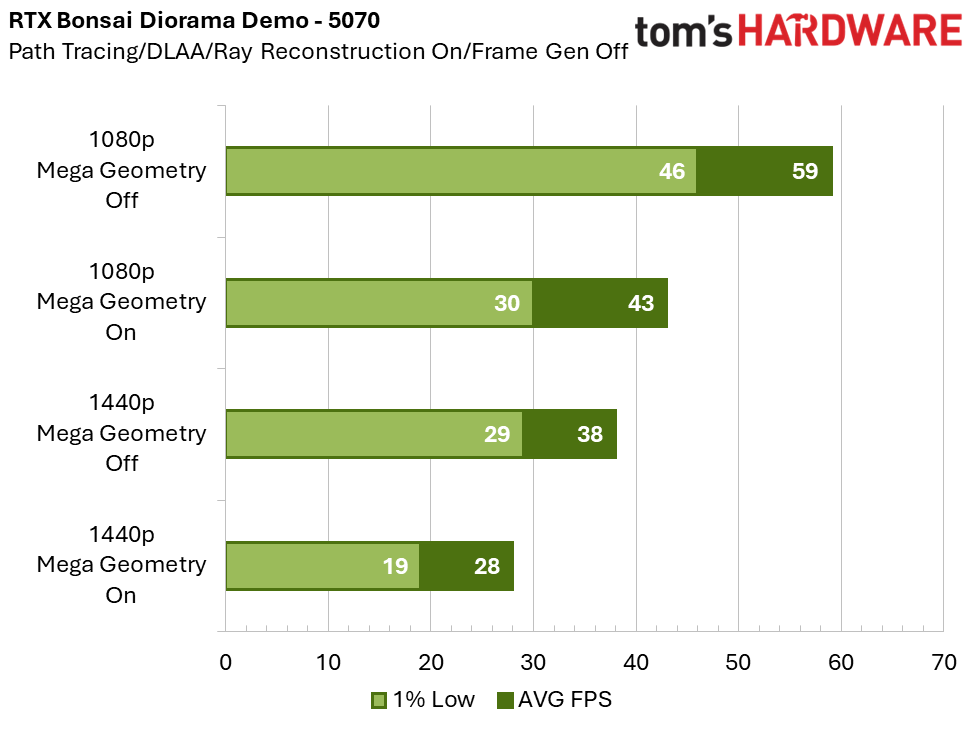
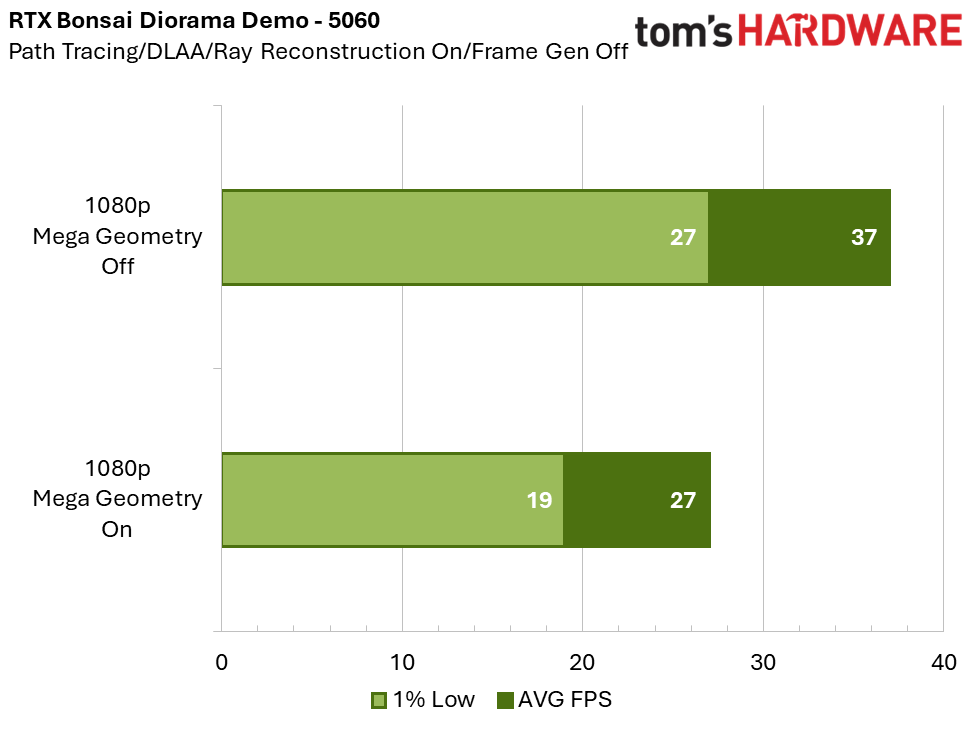
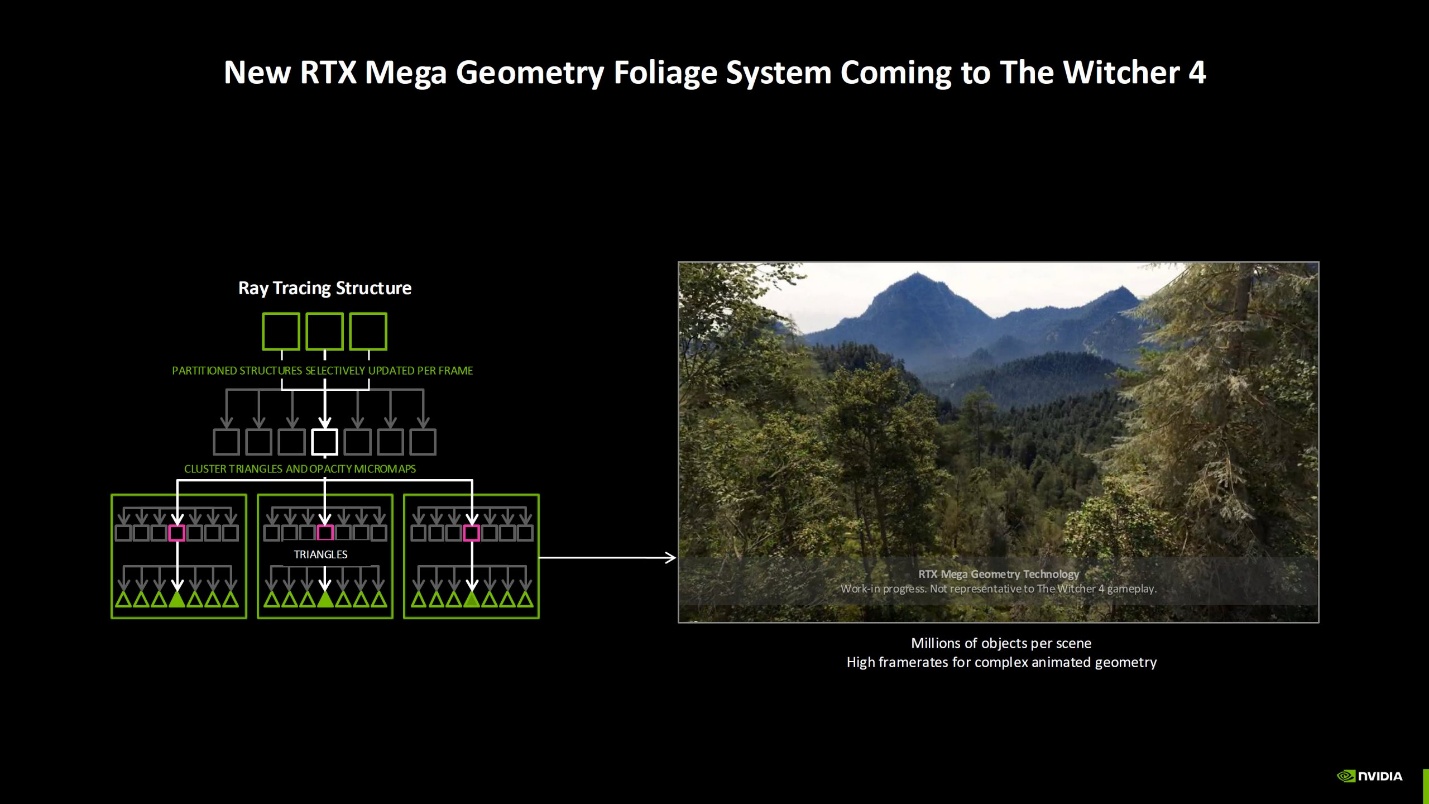
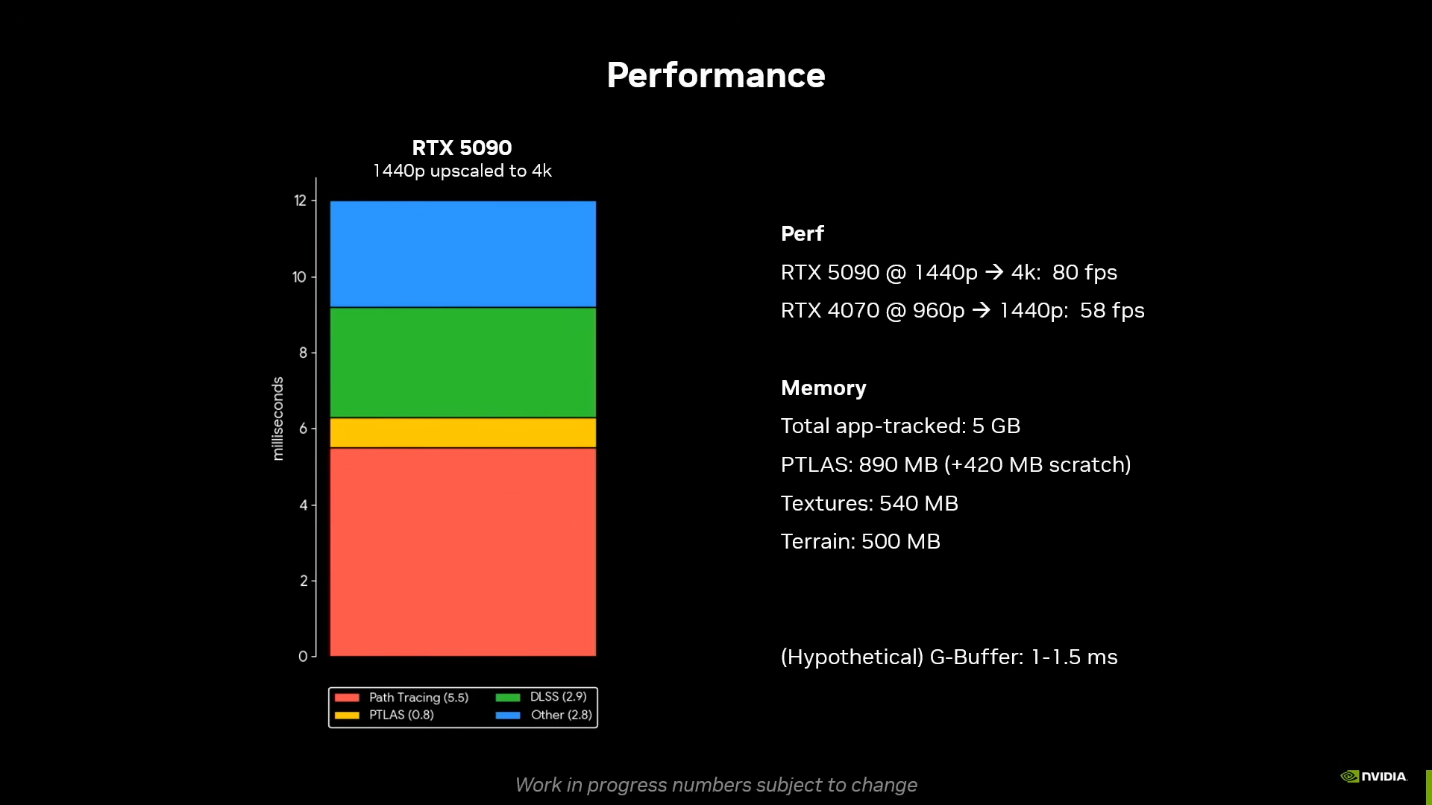
(Image credit: Nvidia) We took Nvidia's RTX Mega Geometry technology through a series of tests in Alan Wake 2 and the RTX Bonsai Diorama Demo to see how this tech reduces VRAM consumption and eliminates visual artifacts, thus helping pave the way to photorealistic real-time graphics. In 2018, NVIDIA announced its GeForce RTX line of graphics cards based on the Turing architecture, which would allow for hardware-accelerated real-time ray tracing. In November of that year, Battlefield V became the first title to support real-time ray tracing using the Microsoft DirectX Raytracing API (DXR). The game only supported one ray-traced effect – ray-traced reflections. In 2019, Control launched with support for multiple ray-traced effects – RT reflections, RT transparent reflections, indirect diffuse lighting, RT contact shadows, and RT debris. Later, we would see full ray tracing – or path tracing – in games like Quake II RTX , Cyberpunk 2077 , and more.…