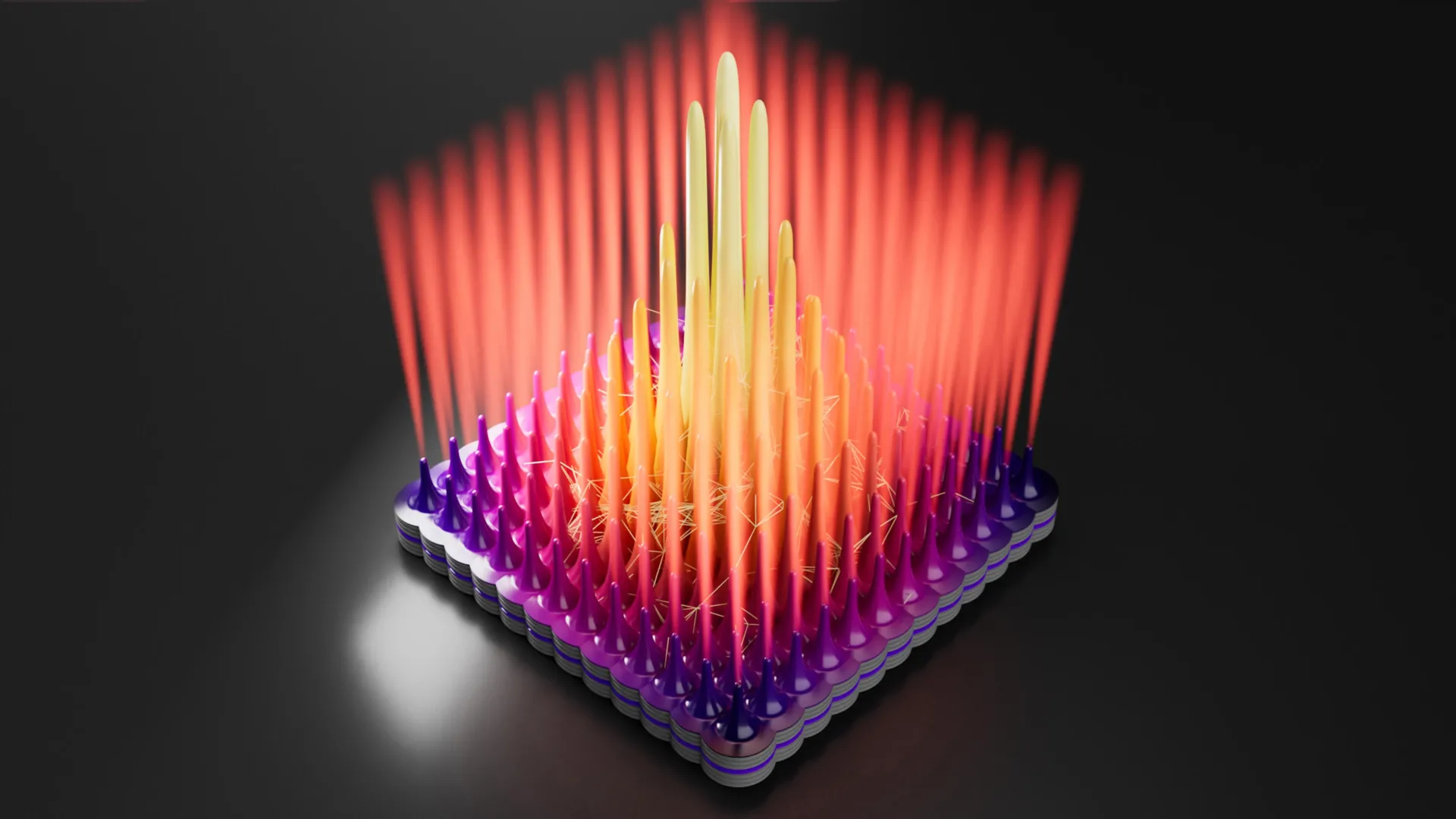
Understanding how surfaces grow has long been one of physics' most important challenges. In 1986, researchers introduced the Kardar-Parisi-Zhang (KPZ) equation, a theory designed to describe growth across a wide range of systems. Over time, this framework has been applied to everything from crystal formation and population dynamics to flame fronts and even machine learning. The idea is simple but powerful: very different systems may follow the same underlying rules when they grow. Now, scientists at the University of Würzburg have taken a major step forward. After earlier confirmation in one-dimensional systems in 2022, the team has achieved the first experimental proof that the KPZ theory also holds in two dimensions. This marks a significant milestone in showing just how universal this model really is. Why Growth Is So Difficult to Predict "When surfaces grow -- whether crystals, bacteria, or flame fronts -- the process is always nonlinear and random.…