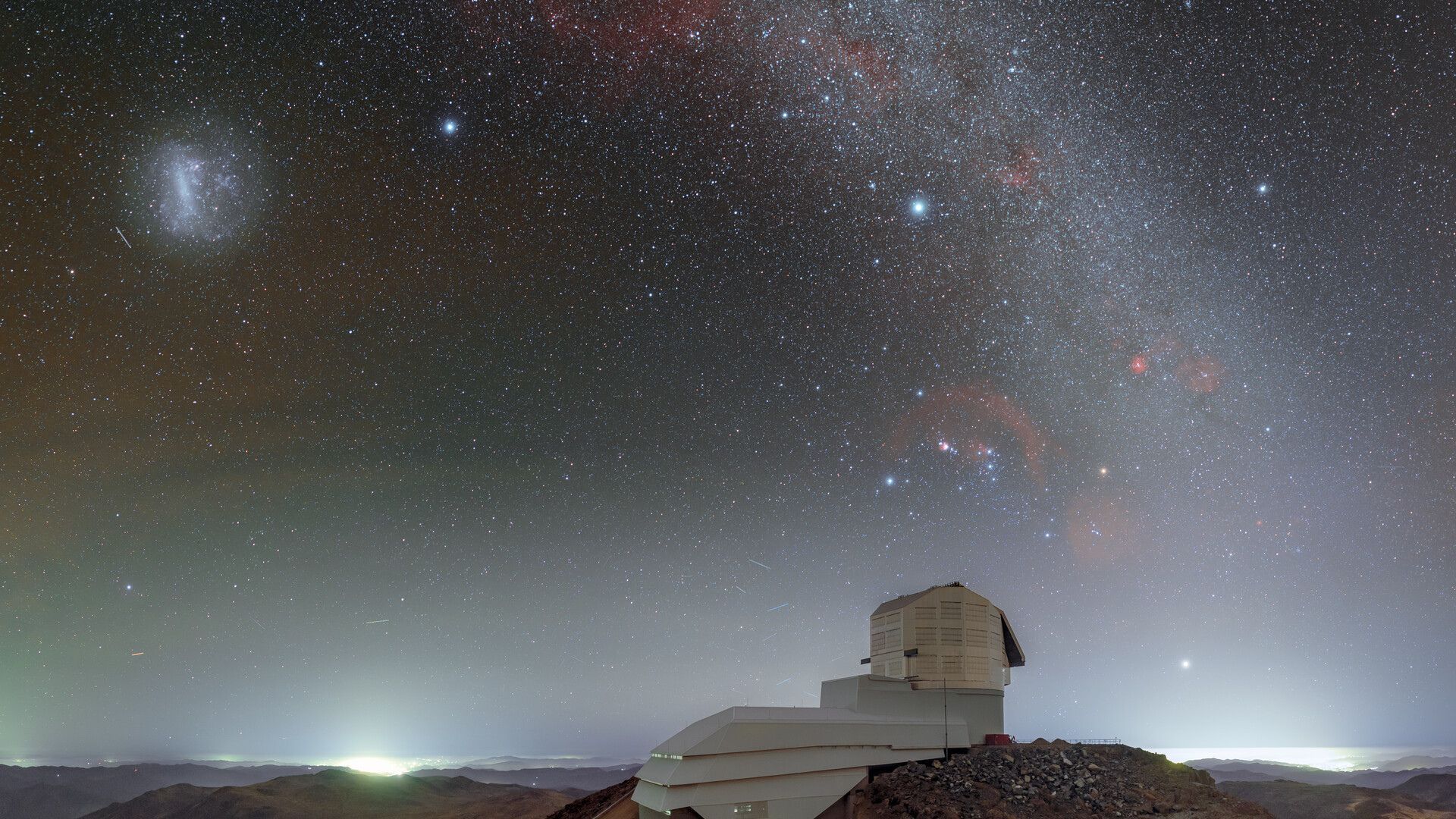
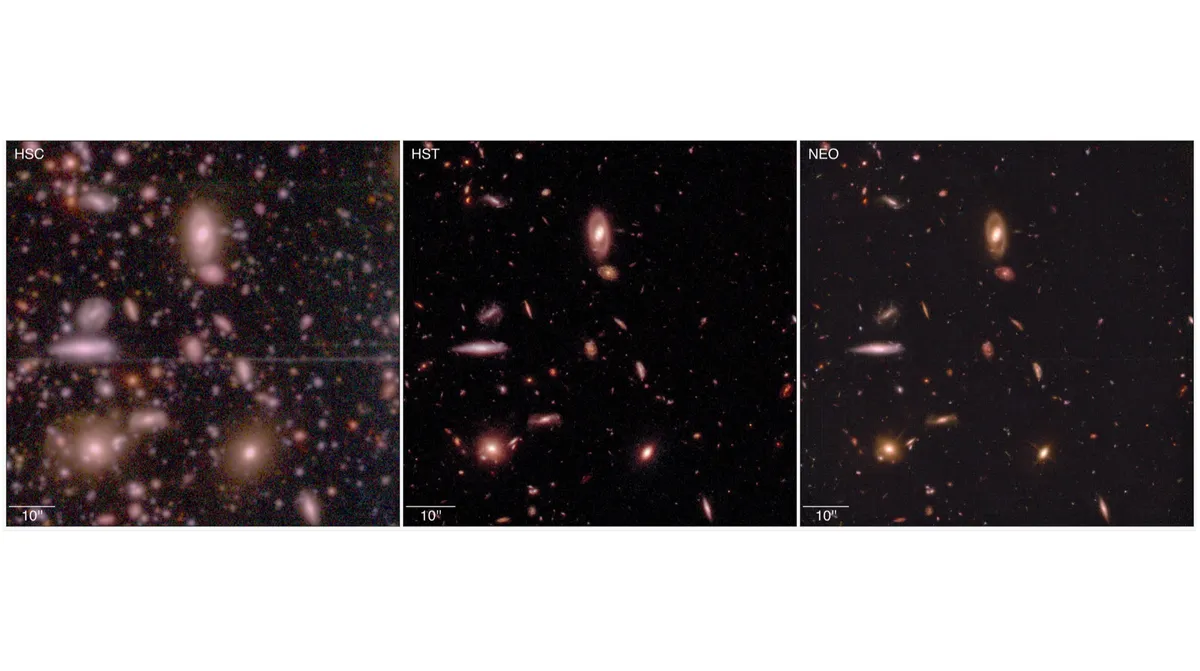
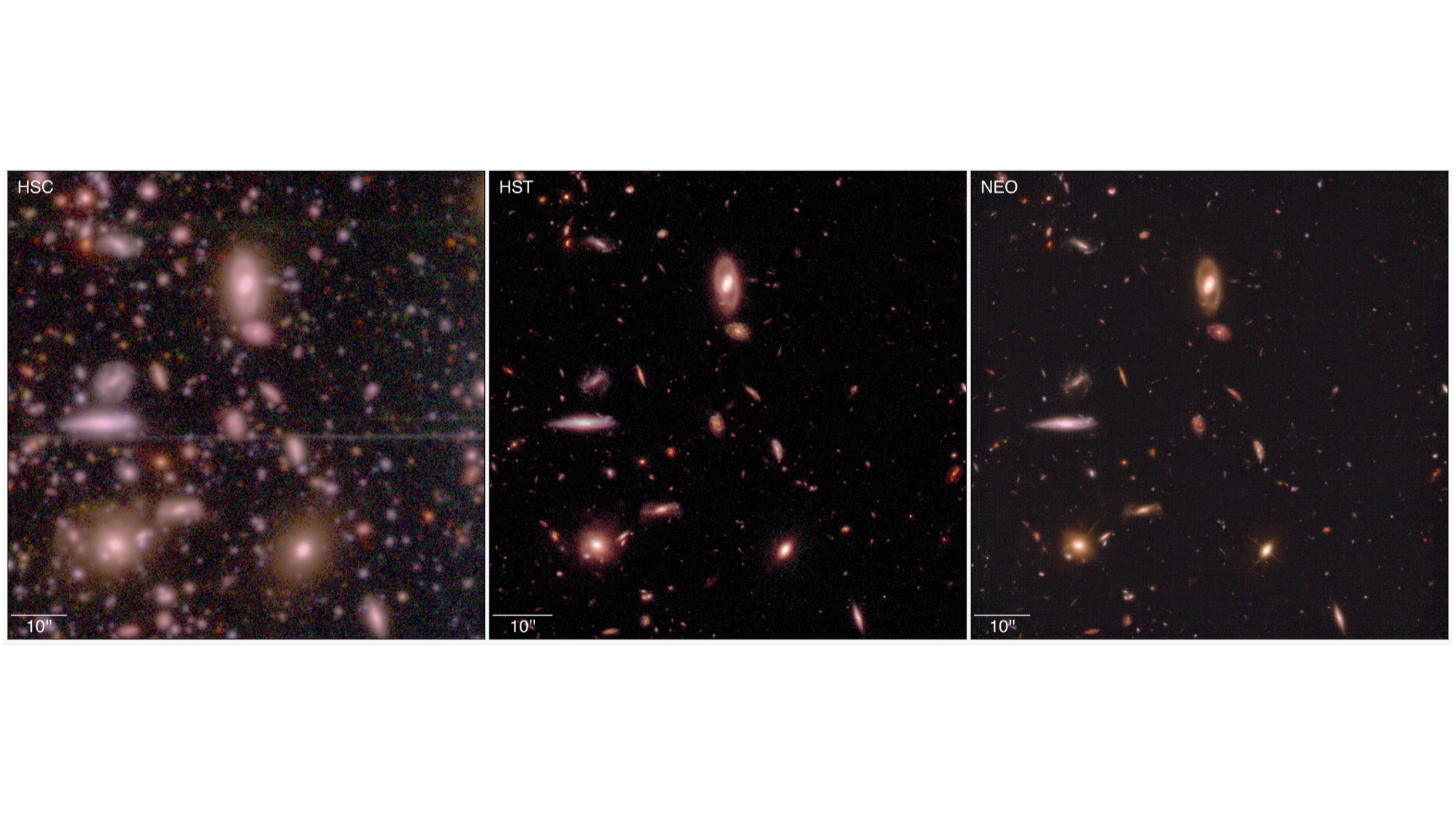
The Vera C. Rubin Observatory in Chile began observing the heavens in 2025. (Image credit: RubinObs/NOIRLab/SLAC/NSF/DOE/AURA/P. Horálek (Institute of Physics in Opava)) AI image processing has sped up analysis of data from NASA's James Webb Space Telescope from years to mere days or less, ushering in an avalanche of ground-breaking discoveries that may otherwise never have been made. And now, the technology will be used to enhance the quality of images taken by the Chile-based Vera C. Rubin Observatory , the newest astronomy power house, to make them appear as sharp as if they have been taken from space. The Vera C. Rubin Observatory, named after the American astronomer who discovered one of the key pieces of evidence for the existence of dark matter , sits atop the 8,770-feet (2,673 meters ) Cerro Pachón in the Chilean Andes. The telescope began operations last year . It scans the entire sky every three nights, aiming to create a 10-year timelapse of the motions of objects in the sky.…