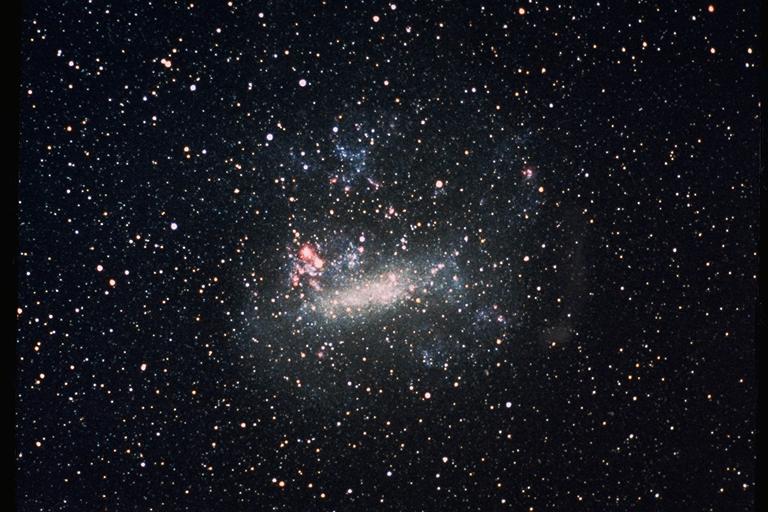
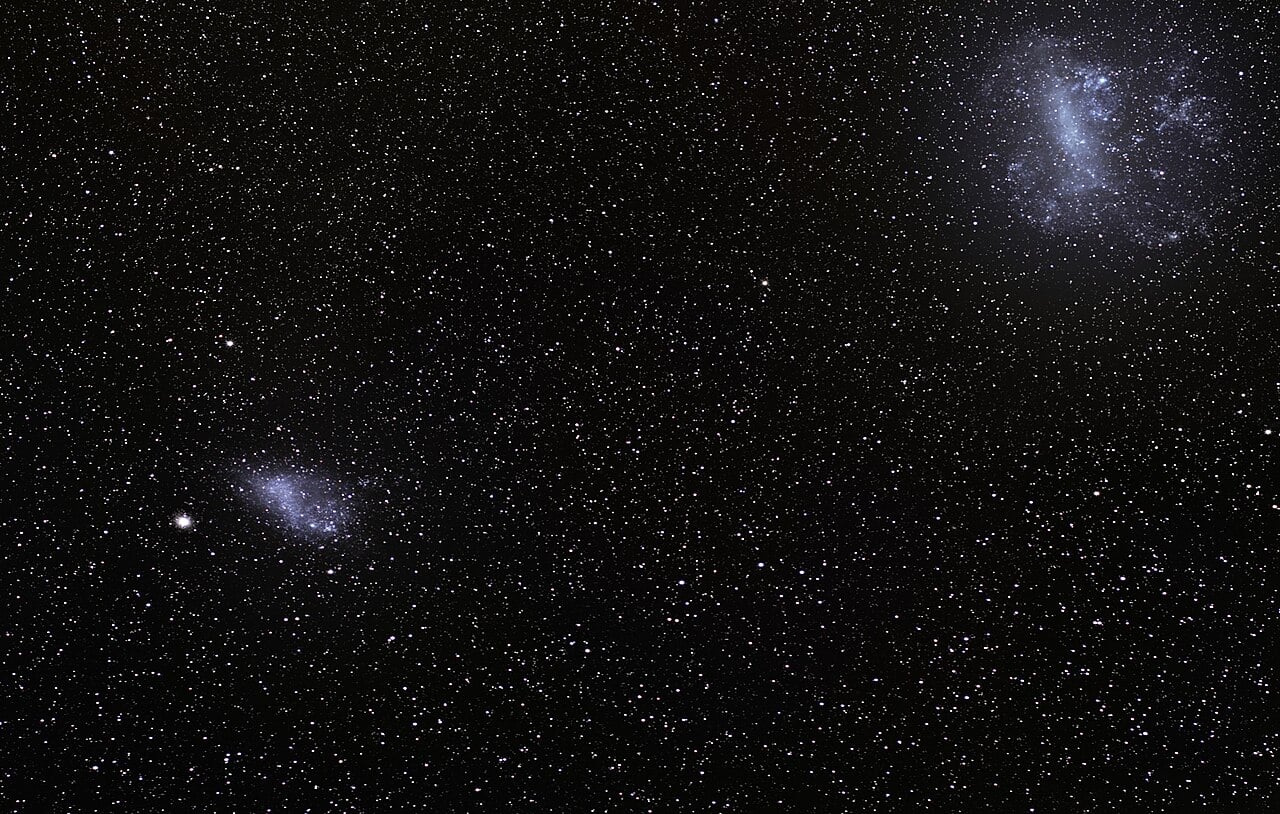
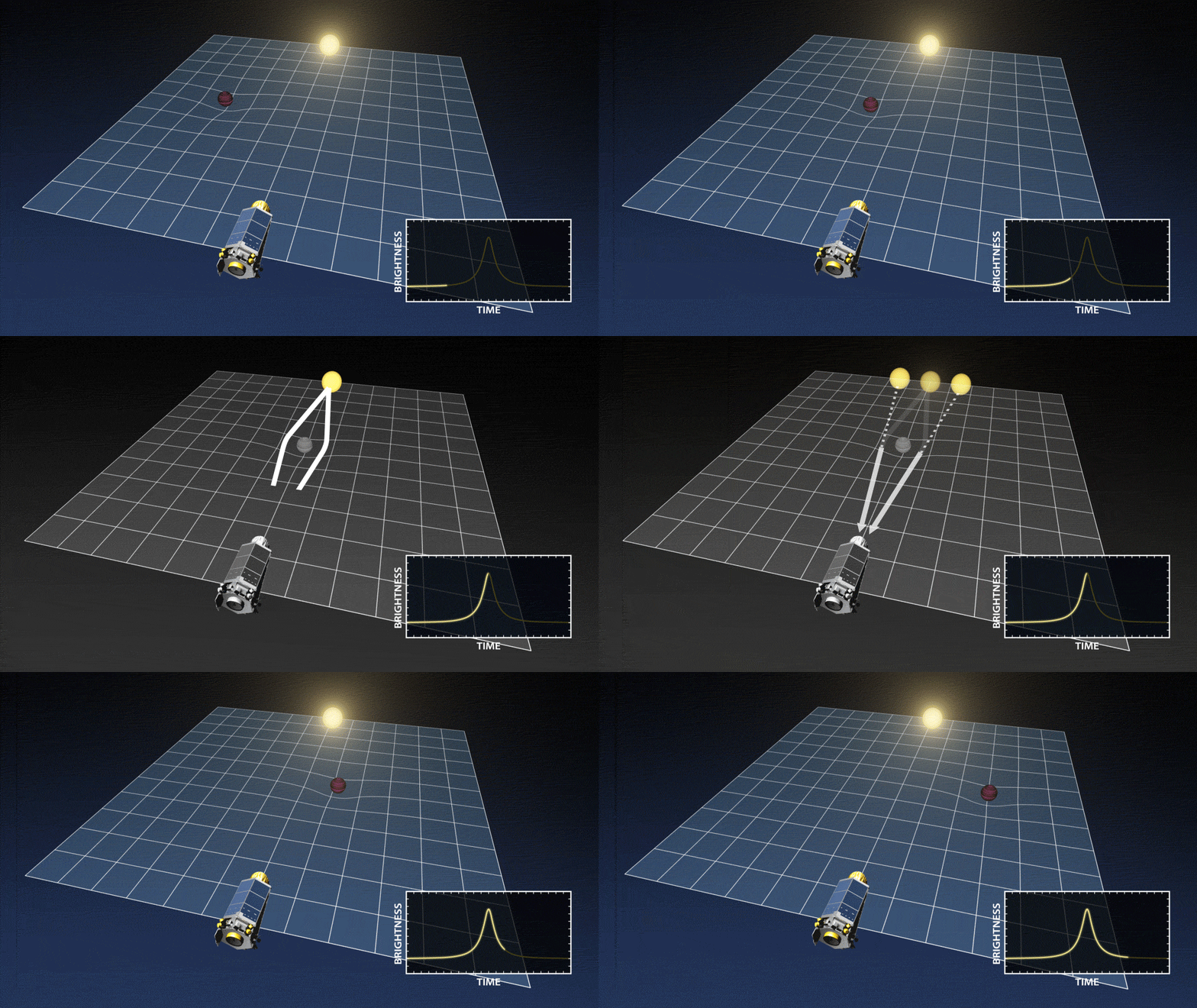
On the night of 18 December 2019, a star in our satellite galaxy, the Large Magellanic Cloud, briefly got brighter. Not dramatically nor explosively, just a smooth symmetrical rise and fall in brightness lasting about an hour, as though something had passed in front of it and bent its light toward us. Then it returned to normal and was never seen to vary again. That something has been named Phoebe. And working out what it actually is turns out to be one of the most intriguing puzzles in modern astronomy. The phenomenon at the heart of the story is called gravitational microlensing and it’s one of the most elegant predictions of Einstein's general theory of relativity. When a massive compact object passes between us and a distant star, its gravity acts like a lens, briefly magnifying the star's light in a very characteristic way. The shape of the brightening is distinctive and entirely unlike anything produced by a variable star, a flare, or an asteroid. The Large and Small Magellanic Clouds (Credit : ESO/S.…