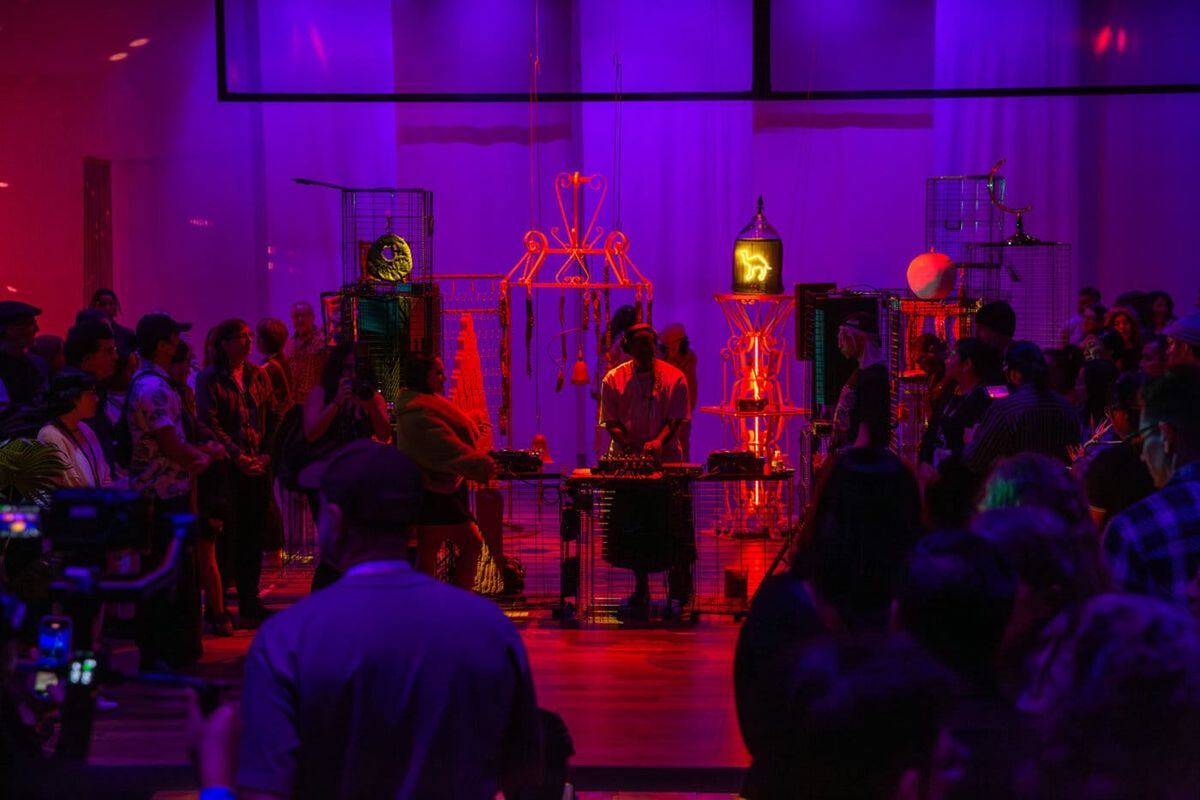
Opinion The rave offers a temporary homeland, a space where belonging is felt rather than declared. April 20, 2026 — 4 min read DJ B Dukes performing amid Sahar Khoury's 2025 installation in Rave into the Future: Art in Motion at the Asian Art Museum (all images © and courtesy the Asian Art Museum) I remember a dance floor for what it allowed us to imagine. In the haze of strobe and bass, we built worlds. We mourned what we had lost and rehearsed what might come next. As a curator, I understand raving as a transformative method of worldbuilding, one that can expand out of the warehouse and into the museum. Rave culture has long been dismissed as escapist or unserious, dance floors as hedonistic or indulgent, places of temporary release rather than political formation. Yet collective dancing has always been more than leisure, as McKenzie Wark and Destiny Brundidge point out in the anthology Writing on Raving (2025). When bodies move in rhythm, hierarchies loosen.…