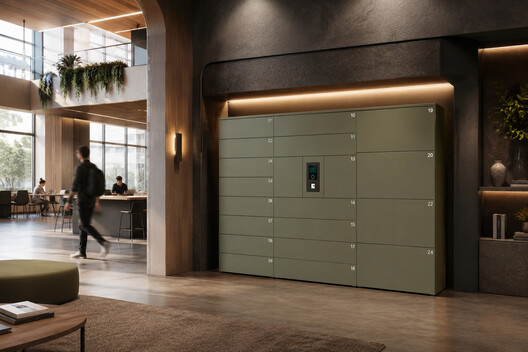
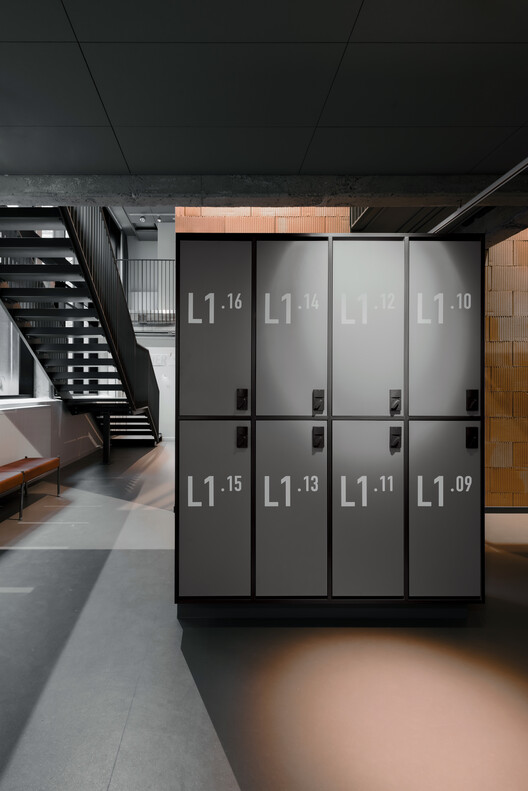
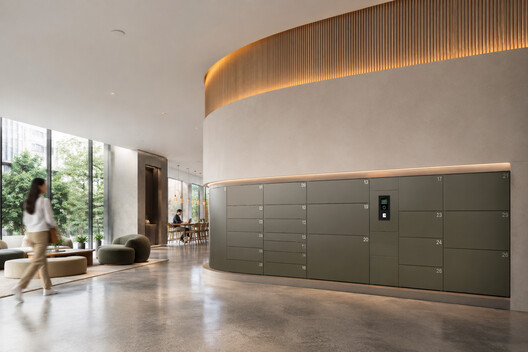
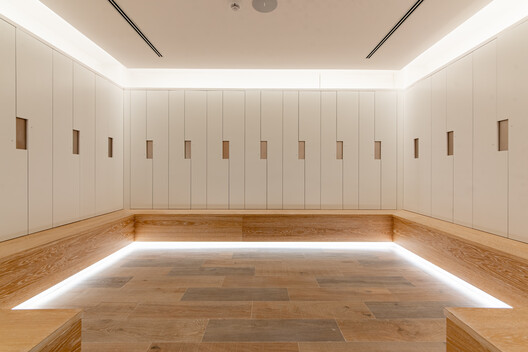
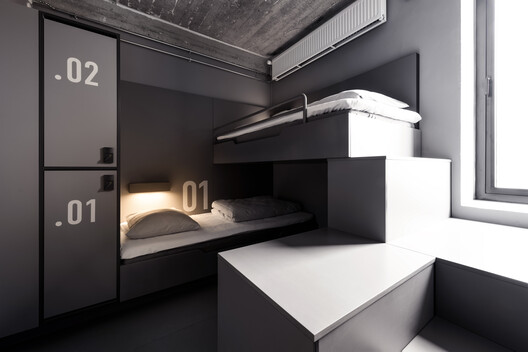
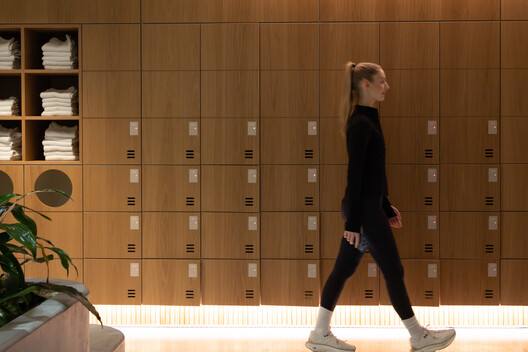
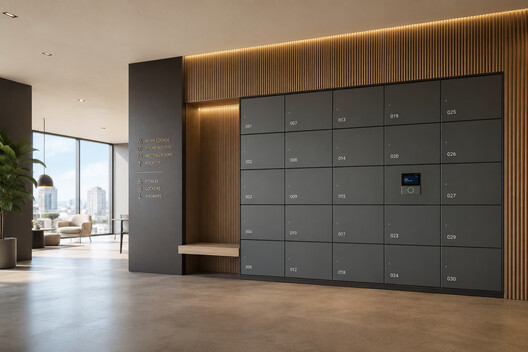
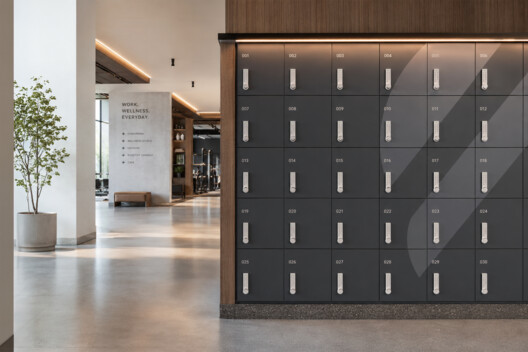
Smart locker system by Gantner and Salto How can the most structured elements in architecture give rise to unplanned forms of everyday life? "Spontaneous order" describes how structured systems can generate unplanned but coherent patterns of behavior. In urban discourse, it is often used to describe cities: frameworks of streets, plots, and buildings that are designed, while everyday life is not. Movement, encounters, routines, and informal uses emerge from simple spatial rules rather than explicit programming. In cities , this is visible in how sidewalks, stations, and thresholds operate. The structure is fixed, but the social order is fluid, setting conditions for behavior rather than defining it. A similar logic can be observed in architectural micro- infrastructures such as locker systems. Like cities, lockers rely on structured frameworks that do not prescribe how life unfolds within them .…