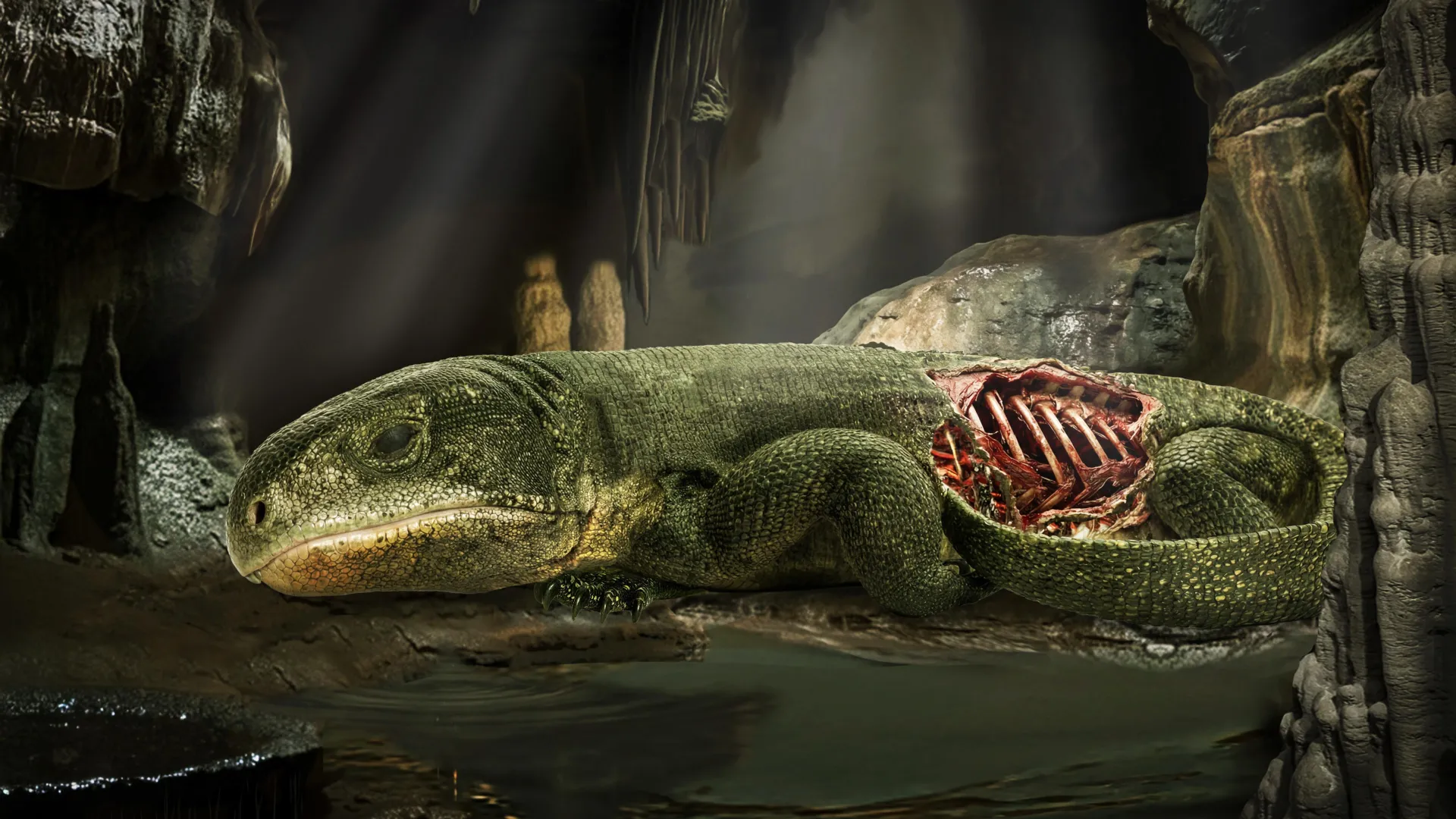
Every breath you take is part of a very ancient story. The steady movement of your chest, the muscles between your ribs pulling outward, and the air filling your lungs feel completely routine. Yet this familiar process traces back hundreds of millions of years. A remarkably preserved reptile that died in an Oklahoma cave about 289 million years ago has now revealed the earliest known example of this breathing system in amniotes -- a group that includes reptiles, birds, mammals, and their shared ancestors, among the first animals to fully adapt to life on land. In a study published in Nature, scientists describe the exceptional preservation of a small, lizard-like reptile called Captorhinus aguti from the early Permian period. Although only a few inches long, this fossil contains far more than bones. It preserves three dimensional skin, calcified cartilage, and even traces of proteins. These protein remnants are nearly 100 million years older than any previously identified in fossils.…