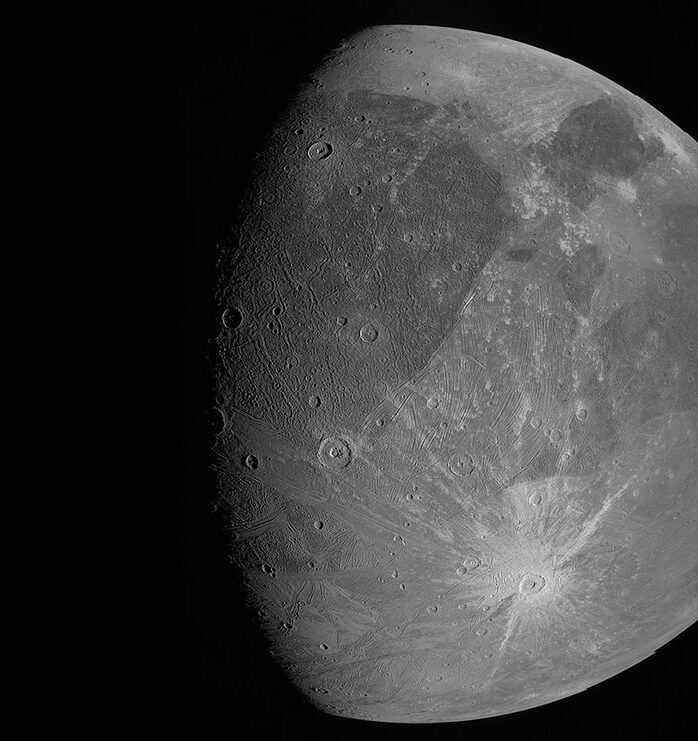
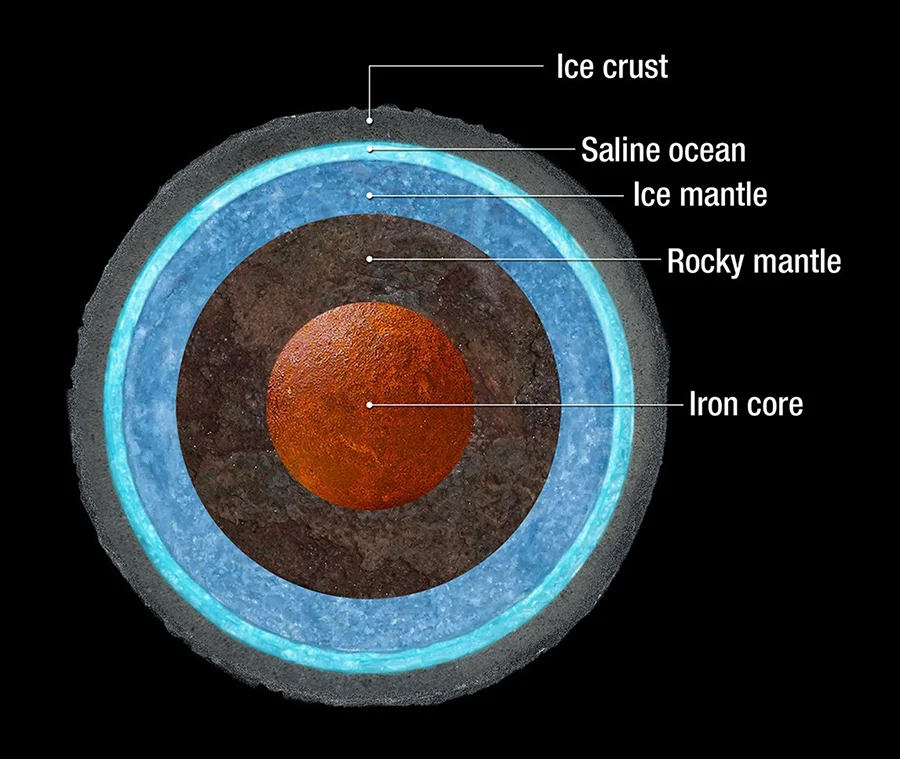
A new model explains how Ganymede got its molten core — which in turn has given Jupiter’s largest moon its magnetic field. This image of Ganymede was obtained by the JunoCam imager during Juno’s June 7, 2021, flyby of the icy moon. NASA / JPL-Caltech / SwRI / MSSS Ganymede is the only moon in the solar system that generates its own magnetic field. That field in turn suggests that within the moon is a molten core. But a new study suggests the core might have appeared only recently. Planets make magnetic fields in hot, electrically conductive liquid layers, like Earth’s outer core. Despite Ganymede’s size (the moon is larger than Mercury), it’s unclear how it could have formed with a metal core, much less how such a core would stay molten through all of the solar system’s history to make a magnetosphere today. A new study in Science Advances , led by postdoctoral researcher Kevin Trinh (Caltech), suggests that maybe Ganymede’s metal core wasn’t present from birth.…