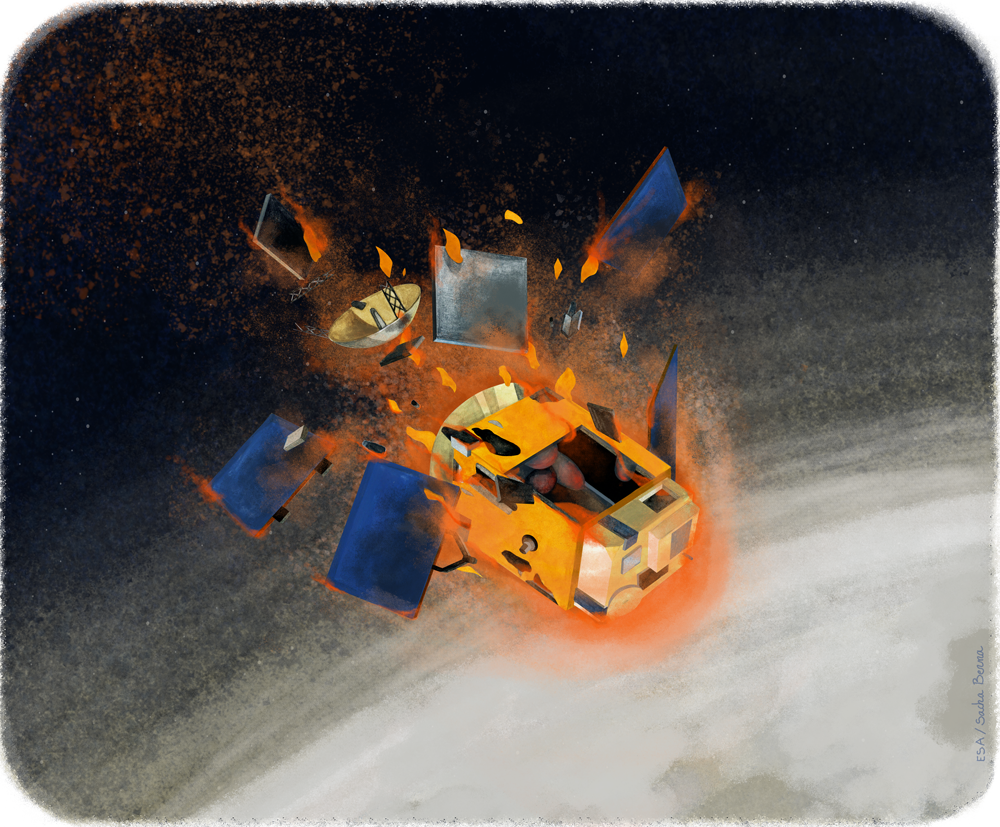
A satellite breaks apart during atmospheric reentry, with solar panels, a dish antenna, and other components flying outward as intense heat engulfs the spacecraft (shown here in an artist's depiction). As launch rates have surged in recent years, spacecraft built from stronger, more heat-resistant materials are increasingly surviving reentry and reaching the ground as dangerous debris. Credit: ESA/ Sacha Berna When it comes to space debris, what goes up is coming down more often – and not safely. When spacecraft launch, some components, including nonreusable rocket boosters, are jettisoned to decrease weight, leaving them to intentionally burn up as they reenter the atmosphere. Satellites also enter the atmosphere at the end of their life, supposedly burning up. But in many cases, they are not doing so as predicted . Debris from partially burned-up spacecraft components and satellites reentering Earth’s atmosphere can pose a risk to people and structures on the ground .…