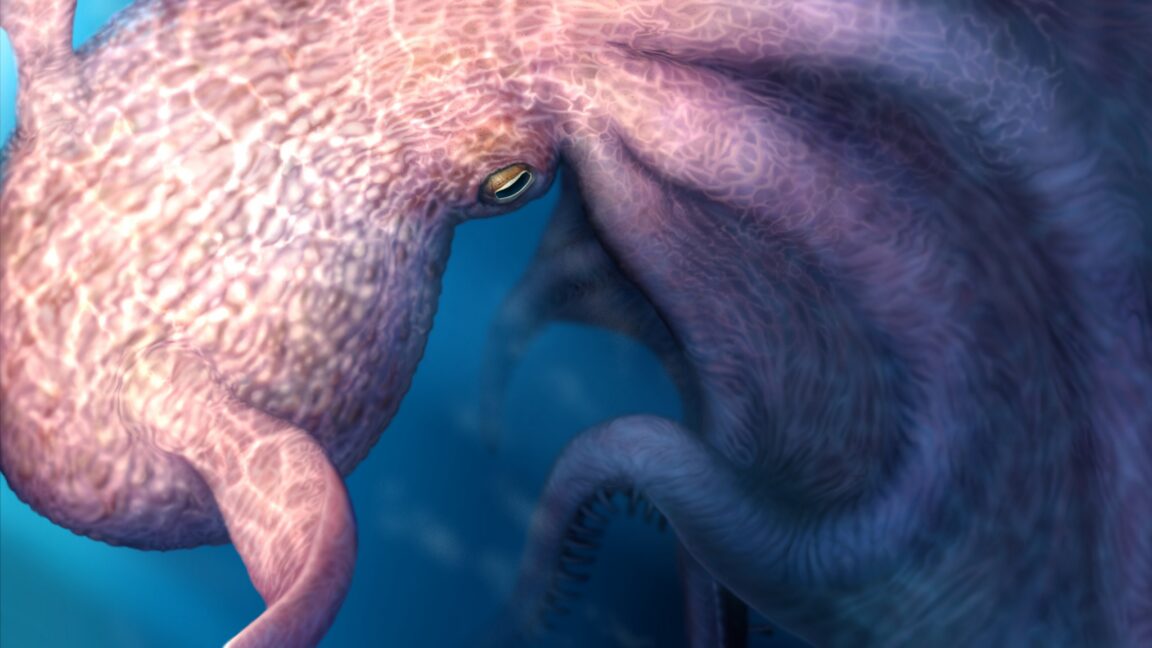
On top of that, when analyzing the beaks, the team noticed a distinct pattern. The wear wasn’t uniform. The right edge of the jaw was consistently more worn down, chipped, and scratched than the left. The team concluded this asymmetry wasn’t an accident but a proof of lateralized behavior. It’s a tendency we observe in modern octopuses, which often favor a specific side of their body or a particular eye when performing complex tasks. In biology, lateralized behavior is usually linked to a highly sophisticated, specialized nervous system. “Of course, we cannot directly measure intelligence from a fossil,” Iba said. “But the asymmetric wear suggests that these animals may also have had advanced and individualized hunting behavior, similar in some ways to modern octopuses.” They were not just huge and powerful. They were probably smart.…